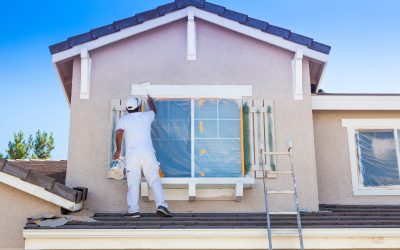
Preparing a two-story home for exterior painting starts with a complete inspection of both the upper and lower surfaces, followed by cleaning, repairs, protection, scraping or sanding where needed, caulking, and appropriate priming. The second story adds another consideration: painters must plan safe access to upper walls, fascia, eaves, trim, and other elevated areas before coating work begins.
The extra height does not fundamentally change what a painted exterior needs. Surfaces still need to be clean, sound, dry, and properly prepared. What changes is how painters reach, inspect, protect, and work on areas that may be difficult to evaluate from ground level.
For two-story homes in Henderson, NV, careful preparation can be particularly important because an exterior may include large stucco walls, upper trim, fascia, doors, garage areas, and architectural details that all have different conditions.
What Is Checked Before a Two-Story Home Is Painted?
Preparation should begin with an exterior assessment rather than immediately setting up equipment and applying paint.
Painters need to identify which areas are being painted and what condition those surfaces are in.
The inspection may include:
- Exterior walls
- Stucco surfaces
- Fascia
- Eaves
- Exterior doors
- Garage doors
- Trim
- Previously repaired areas
- Cracks or gaps
- Peeling or loose coatings
- Areas with accumulated dirt or residue
- Locations that may require additional access planning
The second story should receive the same attention as the first.
Conditions along an upper fascia board or beneath an eave may be difficult for a homeowner to see from the ground. Preparation planning should therefore account for elevated surfaces instead of assuming they are in the same condition as lower walls.
A complete assessment also helps determine which parts of the exterior need simple cleaning and which require repair or more involved surface preparation.
Why Does Access Planning Matter on a Two-Story House?
The upper level introduces working-at-height considerations that do not exist on a single-story wall.
Before painting starts, crews need to determine how they will safely reach each surface. Access can vary depending on the architecture of the home, ground conditions, rooflines, landscaping, and location of upper-story features.
A tall uninterrupted wall may present a different setup from an upper section positioned above a patio roof, garage, entry feature, or narrow side yard.
This is one reason homeowners should be cautious about treating a two-story exterior as simply a larger version of a small one-story project.
Professional outside house painters need enough access not only to apply paint but also to perform the preparation that comes first. Reaching the surface only for the final coating is not enough if loose material, cracks, dirt, or other conditions need attention beforehand.
Does the House Need to Be Washed Before Painting?
Exterior surfaces generally need to be clean before they are coated.
Dirt, dust, loose material, and other contamination can interfere with the preparation and coating process. Sherwin-Williams recommends removing surface contamination and allowing washed exterior surfaces to dry before proceeding with painting.
Cleaning a two-story house requires planning because upper surfaces need the same attention as lower ones.
The goal is not simply to make the home look cleaner. Washing is part of preparing a suitable surface for the coatings that follow.
Depending on the exterior and its condition, preparation may involve power washing or another appropriate cleaning method.
After washing, the surfaces need sufficient drying time before later preparation and painting stages begin.
Does Pressure Washing Remove All of the Preparation Work?
No.
Cleaning and surface repair are separate steps.
Washing may remove dirt, dust, loose contaminants, and some deteriorated material, but it does not automatically correct cracked stucco, failing caulk, rough edges, exposed substrate, or peeling coatings that remain attached after cleaning.
Once the exterior is dry, painters can inspect it again.
This second look can be useful because a clean surface may reveal conditions that were less obvious beforehand.
Areas with failing paint may need scraping or sanding. Cracks and imperfections may need appropriate repair. Bare or repaired surfaces may require primer depending on the substrate and coating system.
Sherwin-Williams’ exterior preparation guidance similarly separates cleaning from scraping, sanding, repairing, and priming.
How Are Stucco Walls Prepared?
Stucco should be evaluated for cleanliness, loose material, and cracks or damaged areas before painting.
That matters in Henderson because stucco is common on homes throughout the region, and large two-story elevations can contain much more surface area than is immediately apparent from the street.
Preparation may involve cleaning the wall and addressing appropriate cracks or damaged stucco before coatings are applied.
The objective is to establish a sound surface.
Simply rolling paint across a visible crack does not repair the underlying separation. Likewise, coating loose material does not make that material secure.
Sherwin-Williams specifies that stucco should be clean and clear of loose material before coating.
Homeowners considering exterior home painting should therefore expect preparation to involve more than selecting a color and scheduling the application itself.
What Happens to Peeling or Loose Paint?
Loose or failing coatings need attention before new paint is applied.
Painting directly over peeling material does not restore the bond between that old coating and the surface beneath it.
Where appropriate, loose paint may need to be scraped away and rough transitions smoothed before recoating.
The exact preparation depends on the substrate and its condition.
Upper-story areas can make this step particularly important because deterioration around fascia, trim, or architectural details may be harder to notice during a casual ground-level inspection.
Preparation therefore needs to cover the complete exterior, not just the easily visible lower walls.
Should Cracks and Gaps Be Caulked Before Painting?
Appropriate cracks, joints, and gaps may need to be addressed as part of exterior preparation.
However, caulking should not be applied indiscriminately to every opening on a building. Different joints and materials have different requirements, and some assemblies are designed to allow drainage or movement.
Where caulk is appropriate, surfaces need to be properly prepared and the product must be compatible with the adjoining materials and intended exterior use.
Sherwin-Williams notes that surface preparation for caulking includes removing contamination, loose coatings, and deteriorated caulk. It also cautions that the selected material needs to be appropriate for the surfaces involved.
For a two-story house, these joints may occur around windows, trim, fascia, doors, and other architectural transitions on both levels.
When Is Primer Needed on an Exterior?
Primer is not automatically required over every square foot of every previously painted house.
Its use depends on the substrate, existing coating, repairs, exposed areas, and selected paint system.
Bare surfaces, repaired sections, or other areas requiring improved uniformity or adhesion may need an appropriate primer.
For example, if preparation exposes bare wood on a fascia board, that location may need different treatment than an intact painted stucco wall nearby.
Sherwin-Williams’ guidance recommends priming patched or exposed areas for several common exterior substrates and notes that repainting a sound existing coating may not always require complete priming.
The important point is that primer should respond to actual surface conditions rather than being treated as either universally necessary or universally unnecessary.
How Are Windows, Doors, and Other Areas Protected?
Masking and protection are important parts of preparation.
A home’s exterior includes many elements that may not be part of the painting scope, including:
- Windows
- Glass
- Light fixtures
- Hardware
- Portions of doors
- Hardscape
- Outdoor furnishings
- Landscaping near work areas
- Other surfaces adjoining the painted areas
These need to be considered before paint application begins.
On a two-story home, protection also has to account for work taking place overhead.
An upper wall may sit above lower windows, a garage door, an entry area, a patio, or planted areas. Planning should consider what lies below the surface being prepared and painted rather than viewing each wall independently.
Excel Painting’s own published exterior process includes masking windows and other surfaces that are not being painted after washing and repairs are completed.
How Are Fascia and Eaves Prepared?
Fascia and eaves require separate inspection because they are different surfaces from the main walls.
Fascia boards may show peeling coatings, exposed areas, cracking, or other deterioration that requires preparation before repainting.
On two-story homes, these components are also among the highest painted areas.
Painters need sufficient access to clean, inspect, scrape, sand, repair, or prime the material as needed before applying its finish.
A homeowner standing at ground level may notice a general color change along the roofline without being able to see the detailed condition of the coating.
That is why exterior house painting contractors should evaluate upper trim at working distance as part of preparation rather than relying only on observations from below.
Does Landscaping Affect Exterior Painting Preparation?
It can.
Bushes, trees, vines, patio furnishings, decorative items, and other features can restrict access to exterior walls.
Painters need enough working room to prepare and coat the surface without unnecessarily damaging nearby property.
Homeowners may be asked to move portable outdoor objects away from the house before work begins. Landscaping that directly contacts walls may also make some surfaces more difficult to reach.
The specific solution depends on the property.
The objective is to provide reasonable access while protecting surrounding areas throughout the project.
Two-story properties may also require additional clear space for whatever access equipment is appropriate for the upper elevations.
Are Upper and Lower Walls Prepared the Same Way?
The preparation principles are generally the same, but the conditions may not be.
One elevation can experience very different exposure from another. Upper sections may also have trim, roofline transitions, or architectural features that do not exist at ground level.
A two-story home should therefore not be approached as though every square foot has identical preparation needs.
One wall may primarily need cleaning, while another includes cracked stucco. An upper fascia section may have coating deterioration while nearby wall paint remains intact.
Good preparation responds to the surface that is actually present.
That is also why exterior house painting services should be scoped after inspection rather than assuming that every exterior follows an identical checklist.
How Does Weather Affect the Preparation Schedule?
Exterior coatings need suitable environmental conditions.
Cleaning also introduces moisture to the exterior, which means the surfaces need time to dry before subsequent preparation and painting.
Temperature, wind, precipitation, and product requirements can all affect when work proceeds.
Manufacturer instructions should guide acceptable application conditions for the specific coating being used. Sherwin-Williams advises against exterior painting immediately after rain, when rain is expected, or during unsuitable temperature conditions unless the selected product is specifically formulated for them.
In Henderson, high temperatures can also affect scheduling decisions during parts of the year.
This does not mean exterior painting is limited to one narrow season. It means the crew needs to account for actual weather and product requirements rather than following the calendar alone.
What Should Homeowners Do Before Exterior Painters Arrive?
Homeowners can help make the preparation process more efficient by looking around the property before the project begins.
Useful steps can include:
- Moving portable furniture away from exterior walls
- Removing fragile decorations
- Identifying exterior items that should not be painted
- Discussing gates and property access
- Pointing out known damaged areas
- Confirming which doors, trim, fascia, or other features are included
- Discussing landscaping that restricts wall access
- Closing windows before washing or painting when instructed
- Making arrangements for vehicles if garage areas or nearby surfaces are involved
The painting crew should still handle the professional preparation included in its scope.
These homeowner steps are primarily about making the work areas accessible and ensuring expectations are clear.
Why Should Preparation Be Completed Before Color Application?
The final paint can only perform over the surface underneath it.
A clean, sound exterior gives the coating a better foundation than a surface covered with contamination, loose paint, unresolved cracks, or unfinished repairs.
This principle applies whether the home is one or two stories.
What makes a taller house different is that every preparation step must also be performed successfully at elevation.
The upper walls should not receive less cleaning because they are harder to reach. Fascia should not skip inspection because it is above the first story. Repairs should not be limited to areas visible from the driveway.
For outside house painters, access is therefore part of preparation itself.
What Should Be Reviewed After Preparation?
Before finish coating begins, the exterior should be reviewed for remaining preparation concerns.
Painters may look for areas where:
- Loose material remains
- Repairs need further attention
- Bare substrate requires appropriate primer
- Masking needs adjustment
- Dust or debris has accumulated
- Caulk or patching materials need additional drying time
- Upper surfaces need another inspection
This checkpoint can help catch issues before they become harder to address under the finish paint.
On a two-story house, that review should include elevated areas as well as easily accessible walls.
Two-Story Exterior Painting Starts Long Before the First Finish Coat
Preparing a two-story home for exterior painting involves much more than washing the walls and setting up access to the second floor. The process begins with inspection and continues through cleaning, repairs, removal of loose material, surface smoothing, appropriate caulking or priming, masking, protection, and final preparation checks.
Height mainly changes the logistics. Upper walls, fascia, eaves, trim, windows, and architectural details still require the same attention to surface condition as lower areas, but reaching and preparing them requires additional planning.
For homeowners in Henderson considering exterior painting, it is useful to discuss preparation before focusing exclusively on color. Ask what surfaces will be cleaned, how cracks and deteriorated areas will be handled, what parts of the home are included, and how upper-story areas will be accessed and protected.
When preparation is treated as a complete part of the project, the painting phase begins on surfaces that are ready to receive the intended coating rather than relying on finish paint to compensate for work that should have happened beforehand.