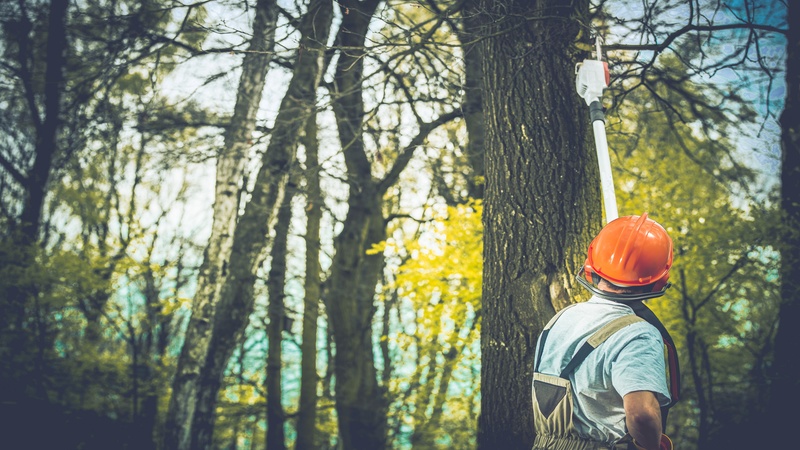
- Knowing when to remove, trim, or leave a tree alone protects your property and your safety.
- Professional crews have the equipment and training to handle hazardous trees that DIY attempts cannot safely manage.
- Yakima County homeowners and businesses can rely on local specialists for removal, trimming, and stump grinding.
Getting tree services in Yakima WA right starts with understanding what each type of work involves and when a tree genuinely needs professional attention. Whether a tree is leaning toward a structure, growing into power lines, or simply past its lifespan, the right call early prevents far greater costs later.
How to Know When a Tree Needs Professional Attention
Not every tree problem is obvious at a glance. A complete removal is typically recommended when a tree is dead, dying, or diseased, or when it poses a hazard by leaning dangerously toward a home, vehicle, street, or power lines. Beyond those clear-cut cases, watch for these warning signs:
- Cracks or splits in the main trunk
- Significant crown dieback or large dead branches
- Fungal growth at the base, which can indicate root decay
- Leaning that has worsened after a storm
Unruly trees are more than an aesthetic annoyance — they can be a safety hazard to your home and family. Regular trimming helps prevent storm damage, enhances the appearance of your lawn, and improves the overall health and stability of the tree.
In October 2025, Washington State’s Department of Labor and Industries issued a Tree Trimmer Hazard Alert after a spike in deaths, with 11 professionals in the state dying between 2020 and 2024, most while performing tree-trimming tasks. That statistic underscores why even experienced homeowners should leave complex removal work to trained crews. The International Society of Arboriculture publishes best management practices and risk assessment standards that guide how qualified arborists evaluate and prioritize tree work.
Tree Removal vs. Trimming vs. Stump Grinding: Choosing the Right Service
Choosing the wrong service wastes money and can damage a tree that could have been saved. The table below outlines the most common tree care services and when each applies.
| Service | Best Used When | Key Benefit |
|---|---|---|
| Tree Trimming | Tree is healthy but overgrown or encroaching | Improves health, structure, and safety |
| Tree Removal | Tree is dead, diseased, or a structural hazard | Eliminates risk to property and people |
| Tree Falling | Large tree needs directional control during removal | Controlled drop protects surrounding structures |
| Stump Grinding | Stump remains after removal | Prevents regrowth, pests, and trip hazards |
Directional and assisted falling techniques ensure a tree falls in the right direction, and the tree can be left behind for the property owner to use as they see fit.
Rotting stumps often attract pests, including termites and many other unwanted insects. Stumps also make it difficult to mow the lawn and can be a tripping hazard. Stump grinding resolves all three issues in a single visit.
Only a professional should trim the trees on your property. Improper tree trimming can cause severe damage, disease, or even death to your trees.
What to Expect from a Professional Tree Service Visit
A reputable tree crew follows a consistent process before any cutting begins. Here is what a standard job typically looks like:
- Site assessment — The crew evaluates the tree’s condition, lean, root structure, and proximity to structures or utilities.
- Hazard planning — Drop zones are identified, and equipment is staged to control where material falls.
- Removal or trimming — Work proceeds in sections for large trees, using rigging where needed to protect surrounding landscaping.
- Cleanup — Branches, debris, and wood are cleared from the site.
Unless you have extensive experience in tree removal, taking on a DIY tree falling project is not a good idea. Professional crews have the proper equipment to handle any size job and the training to take down a tree in the safest way possible.
Trickinnex Tree Trimming & Falling LLC is a family-owned tree company based in Naches, WA, proudly serving residential and commercial clients throughout Yakima County and surrounding areas, with over 20 years of experience specializing in safe and efficient tree removal, trimming, and stump removal.
Frequently Asked Questions
Do I need a permit to remove a tree in Yakima, WA? Permit requirements vary by municipality. Tree removal permits in Washington are governed primarily at the city level rather than statewide, meaning regulations can vary widely even between neighboring cities. Factors such as tree diameter, exceptional tree designation, and environmental protections often determine whether removal is allowed outright or subject to formal review. Contact the City of Yakima’s planning department before removing large or protected trees.
Is it safe to trim trees near power lines myself? No. Work near utility lines requires specialized equipment and coordination with the utility provider. Always hire a professional for any tree work within striking distance of power lines.
How often should trees be trimmed? Most mature trees benefit from a professional inspection and trim every three to five years, though fast-growing species or trees near structures may need attention more frequently.
What happens to the wood and debris after removal? Most professional crews haul away debris or chip branches on-site. Some will leave cut wood at your request for firewood or other uses.
For tree removal, trimming, stump grinding, or directional falling anywhere in Yakima County, reach out to Trickinnex Tree Trimming & Falling LLC. The team serves residential and commercial properties throughout the area and offers free estimates to help you plan the work before any crew arrives on site.