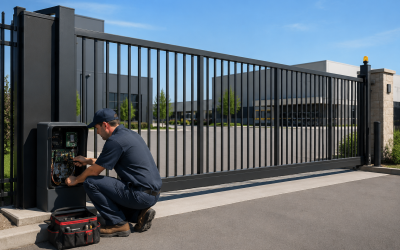
• Door installation methods vary by door type (rolling steel, sectional, high-speed, storefront) and the structural opening involved.
• California building permits are required for most exterior door replacements, with inspections for framing, flashing, and final sealant work.
• Commercial and industrial properties in Commerce, CA typically need rolling steel, sectional, or fire-rated doors suited to loading docks and storefronts.
Choosing the right door installation method depends on the door type, the building’s structural opening, and whether the property is residential or commercial. For industrial and commercial buildings, the method differs significantly from standard residential swing-door replacement.
A proper door installation Commerce CA begins with evaluating the opening size, the load requirements of the door (such as rolling steel versus sectional panels), and whether electrical or structural permits apply. Commercial properties in Commerce, CA often require rolling steel doors, high-speed doors, or sectional doors depending on how the space is used, such as for loading docks or storefronts.
Common Door Types and Installation Approaches
Different door categories call for different installation techniques, hardware, and structural preparation. Matching the method to the building’s use case reduces long-term maintenance issues.
• Rolling steel doors and grilles: installed on tracks with a coiling mechanism, commonly used for warehouses, schools, and parking structures.
• Sectional doors: hinged panels that travel along a vertical track, suited to loading docks and industrial bays.
• High-speed doors: fast-cycling doors designed for frequent openings in distribution or manufacturing settings.
• Storefront and glass aluminum doors: framed systems installed into a prepared opening, often paired with automatic operators.
• Hollow metal doors: solid framed units used where security or fire rating is a priority.
Matching Method to Building Type
Industrial and commercial buildings generally require heavier-duty installation methods than residential structures. A loading dock, for example, calls for sectional or high-speed doors rather than a standard swing door.
Fire-rated doors also follow a distinct installation and testing process, since they must meet certification standards separate from standard door hardware.
Permits and Code Requirements for Door Installation
Door installation in California is regulated under the state building and energy codes, and most projects require permit review before work begins. New or replacement exterior doors generally must meet the mandatory requirements for fenestration products described in the 2025 California Energy Code Section 110.6.
Typical permit steps include:
1. Submitting a building permit application with existing and proposed door specifications.
2. An inspection of the prepared opening, including framing and flashing, before the new door is installed.
3. A final inspection covering sealant application, fasteners, and flashing once the unit is in place.
Property owners in Commerce, CA should confirm local permit requirements before scheduling replacement work, since inspection sequencing can affect project timelines.
Comparing Door Installation Methods
|
Door Type |
Typical Use |
Installation Complexity |
|
Rolling steel doors |
Warehouses, loading docks |
Moderate to high (track and coil mechanism) |
|
Sectional doors |
Industrial bays, dock equipment |
Moderate (panel and track alignment) |
|
High-speed doors |
Distribution centers, frequent-use areas |
High (motor calibration, safety sensors) |
|
Storefront/glass aluminum |
Retail entries, commercial fronts |
Moderate (framing and operator integration) |
Business Info
Industrial and commercial door work in the Commerce, CA area includes options such as rolling steel doors, sectional doors, high-speed doors, storefront systems, and loading dock equipment, as documented by Learn More About Door Installation Services. Based in the USA, this provider supports commercial and industrial door needs across Commerce, CA without maintaining a dedicated storefront presence in that specific service area.
Frequently Asked Questions
Does a commercial door replacement always require a permit in California? Most exterior door replacement and installation projects require a building permit and associated inspections under current California code, including review of the prepared opening and final sealant work.
What is the difference between a sectional door and a rolling steel door? Sectional doors use hinged panels that travel along a vertical track, while rolling steel doors coil onto a drum above the opening, making rolling steel a common choice for space-constrained loading areas.
Are fire-rated doors installed differently from standard doors? Yes, fire-rated doors require testing and certification in addition to standard installation steps, since they must meet a specific fire-resistance rating rather than general hardware standards.
How do I know which door type fits my building? The right method depends on opening size, frequency of use, and whether the structure is industrial, commercial, or retail, since each use case places different demands on the door mechanism.
Published Service Details
A current outline of Learn More About Door Installation Services covers door types and the general area served around Commerce, CA.