Yes, a commercial parking lot can often be repaved in sections when the property layout, pavement condition, traffic flow, and construction scope allow the work to be divided logically. Sectional repaving can help keep portions of a property usable during construction, but the boundaries between phases need to be planned carefully so each completed area connects properly with the next.
For property managers in Phoenix, AZ, this approach can be useful when completely closing a large parking lot is impractical. However, dividing the project into sections is not simply a matter of drawing lines across the pavement.
Each phase has to make sense from both a construction and operational standpoint.
What Does It Mean to Repave a Parking Lot in Sections?
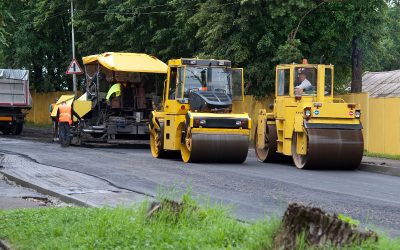
Sectional repaving means completing pavement work in separate work zones rather than closing and repaving the entire parking area at the same time.
One portion may be prepared, paved, and released before crews move into the next section.
The number and size of those sections depend on the property.
A large retail center might have several distinct parking fields connected by drive aisles. An office complex might have front, side, and rear parking areas. An industrial property may have separate employee parking, loading areas, and access roads.
Each of those layouts creates different opportunities and limitations for phased commercial parking lot paving.
The objective is to divide the pavement in a way that allows construction to proceed without creating unnecessary conflicts between completed sections, active work areas, and remaining traffic.
When Does Sectional Repaving Make Sense?
Sectional work may be practical when the property has enough space and circulation options to separate active construction from areas that remain open.
Several factors can support that approach.
Multiple Entrances
A property with more than one usable entrance may have greater flexibility because traffic can potentially be redirected away from an active work area.
Separate Parking Areas
Distinct parking fields can sometimes serve as natural project phases.
For example, one side of an office building may be paved while vehicles temporarily use another parking area.
Large Parking Lots
Larger commercial sites may contain enough usable pavement to keep one section operational while another is closed.
Different Pavement Conditions
Not every part of a parking lot necessarily has the same pavement condition.
One area may require more extensive removal or preparation, while another may need a different scope. Separating those areas can sometimes align the construction sequence with the actual pavement needs.
Operational Constraints
A business may need to maintain customer, tenant, employee, loading, or service access during the project. Sectional work can sometimes help accommodate those requirements.
Whether those factors actually make phased repaving appropriate should be determined based on the property and project rather than assumed in advance.
When Might Repaving in Sections Not Be Practical?
A phased approach is not automatically the best option for every site.
Small properties with only one entrance may have limited room to separate vehicles from construction.
A parking lot may also have a central drive aisle that every vehicle must use. Closing that aisle could make other open parking spaces inaccessible even if they are outside the paving zone.
Other complications can include:
- Limited equipment access
- Closely spaced entrances
- Shared circulation with neighboring properties
- Extensive drainage or grading work
- Utility construction crossing multiple phases
- Concrete work affecting several pavement sections
- Widespread pavement failure
- Project requirements that make continuous construction more practical
A parking lot paving contractor should therefore look at how the entire property functions before deciding whether separate work zones are realistic.
How Are the Boundaries Between Paving Sections Chosen?
Phase boundaries should be deliberate.
Where one section stops and another begins affects both construction and the final pavement.
Whenever possible, boundaries should account for recognizable site features and practical construction limits rather than being chosen only because they divide the square footage evenly.
Possible considerations include:
- Existing pavement joints or transitions
- Drive-aisle limits
- Changes in pavement condition
- Entrances
- Concrete edges
- Drainage features
- Utility structures
- Traffic patterns
- Equipment access
The selected boundary should also allow the next phase to connect properly to the completed pavement.
This is one reason equal-sized paving sections do not always make sense. A slightly larger or smaller phase may create a more practical transition based on the site’s physical features.
What Happens Where Two Paving Phases Meet?
The point where one completed phase meets the next deserves careful planning.
The pavement should transition between sections according to the project requirements rather than leaving an arbitrary edge between old and new material.
The exact preparation depends on the paving scope.
Existing asphalt may need to be cut, milled, removed, or otherwise prepared where one section connects to another. When the next phase begins, crews can then establish the transition needed for that portion of the project.
The goal is to avoid treating each work zone as an isolated patch.
Although the parking lot may be built in stages, the completed surface still needs to function as one connected pavement system.
A commercial asphalt paving contractor should consider those future connections while completing the earlier phases.
Does Sectional Repaving Mean Only the Surface Is Replaced?
Not necessarily.
“Repaving” can describe different scopes depending on existing conditions.
One section might require removal of deteriorated pavement before replacement. Another may involve milling to remove a controlled amount of existing asphalt. Some areas may require additional preparation based on the condition found beneath the surface.
The appropriate work should respond to what exists in each area.
This distinction is important because dividing a parking lot into sections does not mean every section automatically receives identical treatment.
If one portion has widespread deterioration while another remains structurally different, the repair or paving plan may need to reflect that difference.
How Can Milling Help With Sectional Paving?
Asphalt milling can be useful when controlled surface removal is needed before new pavement is placed.
Milling removes a selected depth of existing asphalt and can help address elevations, transitions, or deteriorated surface material depending on the project.
In a phased parking lot project, milling may also help establish a defined work area before paving.
For example, selected sections can potentially be prepared separately while adjacent parts of the property remain outside the active construction zone.
Milling does not determine whether a sectional paving plan is appropriate by itself. Property layout, pavement condition, equipment access, grade, and other construction requirements still matter.
How Do Elevations Affect Section-by-Section Repaving?
Each paving section has to connect with the surfaces around it.
Those surfaces may include:
- Existing asphalt
- Previously completed paving phases
- Concrete curbs
- Gutters
- Sidewalks
- Driveway approaches
- Loading areas
- Utility covers
- Drainage structures
Adding pavement without considering those fixed elevations can create unwanted height differences.
For example, a newly paved section may meet an existing concrete gutter. The finished pavement needs to transition appropriately into that gutter rather than simply being built higher because additional material was placed.
Similarly, when phase two connects to phase one, the project needs to maintain the intended grade through both areas.
This is why sectional commercial paving services require planning beyond individual work-zone boundaries.
How Does Drainage Fit Into a Phased Paving Project?
Drainage should be considered across the entire property rather than one phase at a time.
Water follows elevation across pavement boundaries.
A new section cannot be planned as though the neighboring portion of the parking lot does not exist.
If paving changes the elevation in one area, that may influence how runoff moves toward gutters, drains, low points, or other drainage features.
Property managers should therefore avoid assuming that each section can be designed or restored independently.
The final pavement elevations need to work together across the completed parking lot.
This is particularly important on existing commercial properties where previous overlays, settlement, utility work, or concrete improvements may already have changed local elevations.
Can Different Sections Receive Different Types of Work?
Yes, when pavement conditions support different approaches.
A large commercial parking lot may not deteriorate uniformly.
Drive aisles may experience different traffic than parking stalls. Loading areas may see heavier vehicles. Portions of a lot may have undergone previous utility excavation or repairs while other areas remain relatively unchanged.
That can mean one zone needs more extensive pavement removal while another receives a different treatment.
The decision should be based on pavement condition rather than convenience.
Sectional work can make it easier to define those areas, but the project should still address why each section requires the selected treatment.
How Is Traffic Kept Away From Active Paving Sections?
Active work zones should be clearly separated from areas that remain available for normal property use.
Depending on the project, temporary traffic control may involve barricades, cones, signs, fencing, or other measures appropriate to the site.
Drivers need to understand which routes are open.
That becomes particularly important when one phase is completed and traffic patterns change before the next phase begins.
For example, vehicles may temporarily use the east parking area during the first stage. Once that section becomes available again, traffic may shift there while the west section closes.
Property managers should communicate those changes to tenants, employees, customers, vendors, and other regular site users as appropriate.
The physical paving plan and the temporary traffic plan need to work together.
What Happens to Parking During Each Section?
The available parking supply changes as work moves around the property.
Before construction begins, property managers should estimate which spaces remain usable during each phase.
The location of those spaces can be as important as the number.
A group of open parking spaces may provide limited value if customers cannot easily reach them or if the route to the building is blocked by construction.
Employee parking can sometimes be relocated temporarily to preserve customer spaces closer to occupied businesses.
Multi-tenant properties may also need to consider whether one paving phase disproportionately affects a particular tenant.
Accessible parking and routes require additional consideration and should be handled according to applicable project requirements rather than informal assumptions.
How Do Deliveries Affect Sectional Repaving?
Loading and delivery routes can influence phase boundaries.
Large vehicles need more maneuvering space than passenger cars and may rely on specific drive aisles or service areas.
A work zone that leaves an entrance open may still block the path a truck needs to reach a loading dock.
Before finalizing the paving sequence, property managers should identify:
- Regular delivery locations
- Typical truck routes
- Loading docks
- Service entrances
- Waste collection routes
- Other large-vehicle access needs
This information helps determine whether a proposed phase leaves enough circulation for the businesses that remain operational.
What If Utility or Concrete Work Is Also Planned?
Other construction should be considered before final paving begins.
A parking lot may contain manholes, valve boxes, drainage structures, curbs, sidewalks, or other features that require separate work.
Underground utilities can create additional complications because pavement may need to be excavated to reach them.
If known utility work is scheduled in a particular section, it may make sense to coordinate that work before final asphalt is placed rather than opening a newly paved area again.
Concrete improvements should also be considered because they may establish fixed edges or grades that affect the adjoining asphalt.
Sectional paving works best when it is part of a coordinated site plan instead of a sequence of unrelated construction activities.
Can One Section Reopen Before the Entire Lot Is Finished?
Often, that is one of the practical reasons for using phases.
However, property managers should not decide independently that an area is ready just because paving equipment has moved elsewhere.
The contractor responsible for the work should determine when the completed section can be released for traffic based on the materials, construction activities, project specifications, and site conditions.
Once the area is reopened, the traffic pattern may change.
Temporary signs or barriers may need to move, employee parking may shift, and customers may need updated instructions.
That phase transition should be planned rather than treated as an informal change in the middle of construction.
What Should Property Managers Ask Before Choosing Sectional Repaving?
Before deciding that a parking lot should be repaved in phases, property managers can discuss several questions with the paving contractor:
- Can vehicles still reach usable parking during each phase?
- Are there enough entrances to support changing traffic patterns?
- Where will one paving section connect to the next?
- Do sections have different pavement conditions?
- Will milling or removal be required?
- How will finished elevations connect with existing concrete?
- Does the sequence preserve the intended drainage pattern?
- Are utilities or other construction projects involved?
- Can delivery and service vehicles still reach necessary areas?
- When can each completed section return to traffic?
For properties considering Commercial paving services in Phoenix, AZ, those questions can help determine whether sectional construction fits both the parking lot and the way the property is used.
Sectional Repaving Should Still Create One Connected Parking Lot
Repaving a commercial parking lot in sections can be practical when the property provides enough space, access, and circulation to separate construction from ongoing site use.
But successful sectional paving requires more than dividing a map into work zones.
The boundaries between phases, pavement elevations, drainage, existing concrete, utility structures, traffic flow, parking availability, and future connections all need to be considered.
A well-planned project treats each section as part of the same finished pavement system.
For property managers in Phoenix, the best starting point is to evaluate both the condition of the parking lot and the way vehicles, customers, employees, deliveries, and services move through the property. From there, a commercial asphalt paving contractor can determine whether phased construction is practical and how individual sections should connect as the project progresses.