Snapshot:
- A home carbonator uses pressurized CO2 to turn plain tap water into sparkling water in seconds, cutting down on bottled water purchases.
- Look for cylinder compatibility, bottle material, and whether the machine can handle more than plain water before buying.
- Manual CO2-powered models tend to cost less to run over time than electric units requiring batteries or outlets.
Choosing the Best Carbonated Water Maker for a household typically comes down to how a machine carbonates, what it can carbonate, and how easy it is to keep the CO2 supply going. Shoppers researching this category are usually trying to cut down on bottled beverage purchases, reduce plastic waste, or get more control over fizz strength at home. The right choice depends less on brand hype and more on daily habits: how much sparkling water a household drinks, whether flavored or alcoholic drinks are part of the routine, and how much counter space is available.
The soda maker segment continues to expand. Industry analysis shows the global soda maker market was valued near $1.46 billion in 2025, with growth tied to demand for healthier, customizable drink options and a continuing shift away from sugary sodas. That demand has pushed manufacturers to differentiate on versatility rather than just fizz level.
How Carbonation Machines Actually Work
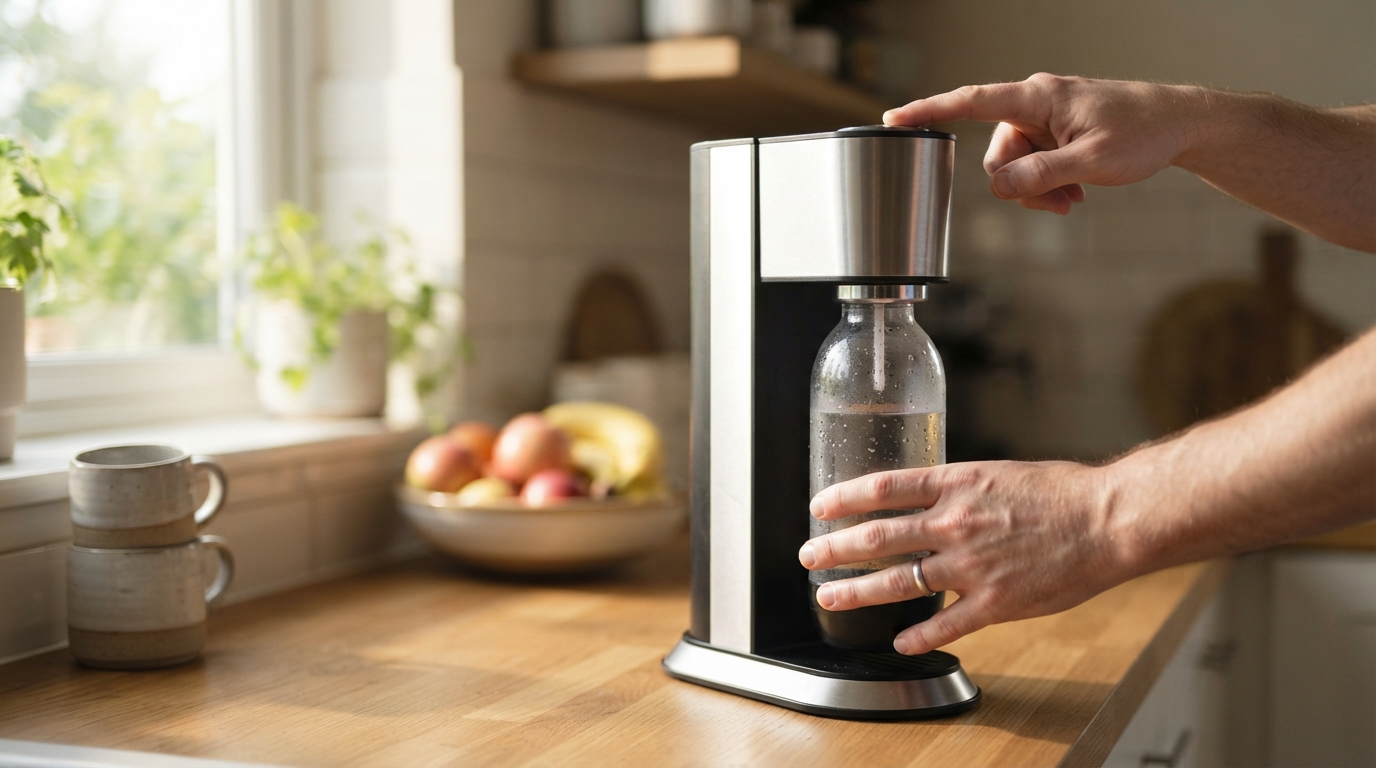
Most home carbonators rely on compressed CO2 cylinders rather than electricity, which keeps the mechanism simple and portable.
- A cylinder connects to the machine’s internal valve.
- Pressing a button releases measured bursts of CO2 into a sealed bottle of liquid.
- The user repeats bursts until the desired fizz level is reached, then releases pressure before removing the bottle.
This basic process is common across the category, though build quality and valve design vary. Models with a two-stage pressure release are designed to let users carbonate drinks beyond still water without a foaming mess, since sugary or carbonated-prone liquids react differently to gas injection than plain water does.
What to Check Before Buying
A few practical details separate a convenient purchase from a frustrating one.
- Cylinder type and refill access. Some machines use proprietary cylinders, while others accept standard threaded CO2 cylinders compatible across several brands.
- What the machine can carbonate. Many carbonators are built only for water; others use infuser technology that allows juice, tea, wine, or cocktails to be carbonated safely without excessive foam-over.
- Bottle material and capacity. BPA-free plastic bottles are common, though some brands offer stainless steel options with no expiration date for the vessel itself.
- Footprint and power source. Countertop units without batteries or electrical cords tend to be easier to place in small kitchens.
Reducing single-use plastic is one of the more consistent motivators behind this purchase. According to EPA research on drinking water regulation, public tap water systems in the United States are held to enforceable safety standards, which supports the case for carbonating filtered tap water at home rather than relying solely on bottled alternatives.
Comparing Common Carbonator Types
| Feature | Manual CO2 Machines | Electric/Smart Machines |
|---|---|---|
| Power source | CO2 cylinder only | Electricity, sometimes app-connected |
| Typical versatility | Often can carbonate multiple drink types | Usually limited to water |
| Maintenance | Cylinder swap or exchange program | Cylinder plus occasional firmware or app updates |
| Best for | Households wanting broad drink flexibility | Users wanting automated, one-touch carbonation |
Manual systems generally appeal to households that carbonate a mix of beverages, while electric or app-connected units target convenience-focused buyers who mainly want consistent sparkling water with minimal manual effort.
Frequently Asked Questions
Does a carbonated water maker save money over bottled sparkling water? Cost savings depend on usage frequency, cylinder refill pricing, and how many liters a household typically drinks, so it is worth comparing a specific machine’s CO2 yield per cylinder against local bottled water prices.
Can every carbonator handle juice or wine, not just water? No. Many standard carbonators are engineered only for plain water; machines with specialized infuser or pressure-release systems are needed to safely carbonate sugary or alcoholic drinks without excessive foaming.
How long does a CO2 cylinder typically last? Cylinder yield varies by size, but many standard cylinders are rated to carbonate dozens of liters before needing a refill or exchange, depending on desired fizz intensity.
Is a countertop carbonator hard to maintain? Basic upkeep usually involves rinsing the bottle, occasionally cleaning the valve area, and tracking when a cylinder needs to be swapped or exchanged through a refill program.
Home carbonation has moved from a novelty appliance to a practical kitchen tool for households trying to manage cost, convenience, and plastic waste at the same time. Matching a machine’s capabilities, cylinder system, and bottle design to actual drinking habits makes the difference between a gadget that gets used daily and one that sits in a cabinet. Drinkmate is a home beverage carbonation brand known for machines and CO2 cylinder accessories designed to carbonate a range of cold drinks beyond plain water.
Next Steps for Comparing Options
Narrowing down a carbonator often comes down to testing how a specific model handles the drinks a household actually consumes, not just sparkling water. For anyone comparing machines, cylinders, and accessories side by side, it can help to review detailed specifications and compatibility notes before deciding. Visit Drinkmate to look into available models, cylinder exchange options, and accessories suited to different carbonation habits.