At glance:
• Commercial electrical inspections check panels, wiring, grounding, and life-safety systems against NEC, OSHA, and NFPA standards.
• Most commercial and industrial equipment needs inspection at least once every 12 months, with more frequent checks for higher-risk components.
• A qualified commercial electrician identifies hazards such as outdated panels, missing GFCI protection, and double-tapped breakers before they cause downtime or code violations.
A commercial electrical inspection is a systematic review of a building’s wiring, panels, grounding, and safety equipment to confirm the system meets current code and poses no hazard to occupants. Building owners typically schedule these inspections during lease turnovers, after renovations, or on a recurring annual basis to satisfy insurance and code requirements.
Finding a qualified Commercial Electrician matters because office and retail spaces carry different electrical loads than houses, with three-phase service, higher amperage panels, and life-safety systems that residential electricians rarely handle. Older commercial buildings in particular often carry wiring and panel configurations that were never designed for today’s power demands, which raises the stakes of a thorough inspection.
What a Commercial Electrical Inspection Actually Covers
Inspectors move through a building systematically rather than checking equipment at random. A typical commercial walkthrough includes:
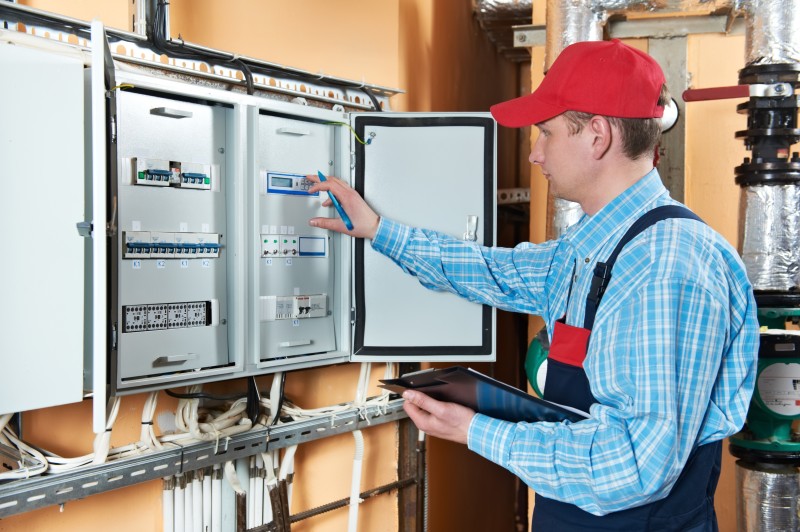
• Panels and breakers – checking for accessible clearance, correct labeling, signs of overheating or corrosion, and no double-tapped breakers.
• Wiring and conduit – confirming conductors are properly sized, secured, and free of exposed or frayed sections.
• Grounding and bonding – verifying that equipment grounds, bonding jumpers, and ground resistance meet code.
• Life-safety systems – testing emergency lighting, illuminated exit signs, and backup battery function.
These categories reflect the standard structure used across commercial electrical inspection checklists, which organize findings into compliance documentation, panels, wiring, and equipment sections. Each item on the list ties back to a specific code reference, which is why documentation matters as much as the physical check itself.
How Often Inspections Are Required
Inspection frequency depends on the type of equipment and the building’s electrical load, but there are baseline expectations commercial property owners should know.
1. Annual inspections are the general standard for commercial and industrial electrical systems.
2. More frequent checks apply to equipment rated at higher physical-condition risk categories, which can require inspection as often as every six months.
3. Backup generators used for emergency power are expected to undergo annual load testing to confirm they perform during an actual outage.
According to NFPA 70B guidance, NFPA 70B was elevated to a mandatory standard in 2023, requiring that all electrical equipment be inspected at least once every 12 months. Equipment rated at Physical Condition 3 requires thermographic inspection every six months, which is a detail many office managers overlook until a failure forces the issue. For employers, the Occupational Health and Safety Administration can issue fines of up to $16,550 per serious violation and $165,514 per willful or repeated violation, so skipping scheduled inspections carries real financial risk beyond safety concerns.
Working clearance is one of the most commonly cited problems during inspections. Clear working space must exist in front of all electrical panels, a minimum of 36 inches, per OSHA 1910.303. For more detail on these federal requirements, the OSHA electrical standards page outlines the specific regulations that apply to workplace wiring, grounding, and equipment use.
Common Violations Found During Inspections
Certain problems show up repeatedly in commercial buildings, especially older office stock.
| Violation Type | Why It Matters | Typical Fix |
| Outdated panelboards | Known failure rates in discontinued brands | Panel upgrade or replacement |
| Missing GFCI protection | Required near sinks, kitchens, and wet areas | Install code-compliant GFCI outlets |
| Double-tapped breakers | Overloads a single terminal lug | Redistribute circuits or add breakers |
| Inadequate working clearance | Blocks safe access during emergencies | Relocate stored items or equipment |
A licensed electrician documents each finding and corrects it against the applicable code section rather than issuing a generic pass or fail. This documentation becomes part of the building’s compliance record for future inspections and insurance reviews.
Scheduling a Commercial Electrical Assessment
Property managers and business owners get the most value from an inspection when they treat it as a planning tool rather than a reactive repair call. Before scheduling, it helps to:
• Pull prior inspection records and permits for comparison.
• Note any recent additions of equipment, such as new machinery or expanded workstations, that may have increased load demands.
• Flag areas with known issues, like flickering lights or warm outlets, so the inspector can prioritize them.
Nicholas Electric Co has worked exclusively on electrical systems in the Allegheny County area, with service offerings that include panel and service upgrades, three-phase wiring installation, and tenant build-out wiring for commercial spaces. Businesses evaluating their building’s electrical condition can review these services directly through Nicholas Electric Co before scheduling an assessment.
Frequently Asked Questions
How long does a commercial electrical inspection take? Duration depends on building size and system complexity. A single-suite office may take a few hours, while a multi-story building with three-phase service and backup generators takes considerably longer.
Who is qualified to perform a commercial electrical inspection? Inspections should be performed by a licensed electrician familiar with the National Electrical Code and OSHA workplace standards, not general maintenance staff.
What happens if my building fails an inspection? The electrician documents each violation with the applicable code reference, then provides a plan to correct the issues, which may range from relabeling breakers to a full panel upgrade.
Do office buildings need inspections as often as industrial facilities? Baseline frequency is generally annual for both, though equipment with higher risk ratings or heavier use may require more frequent checks regardless of building type.
Scheduling electrical inspections on a predictable timeline protects both occupant safety and the long-term condition of a building’s electrical infrastructure. Property owners who stay ahead of code changes and documentation requirements avoid the higher costs that come with emergency repairs or failed inspections later on.