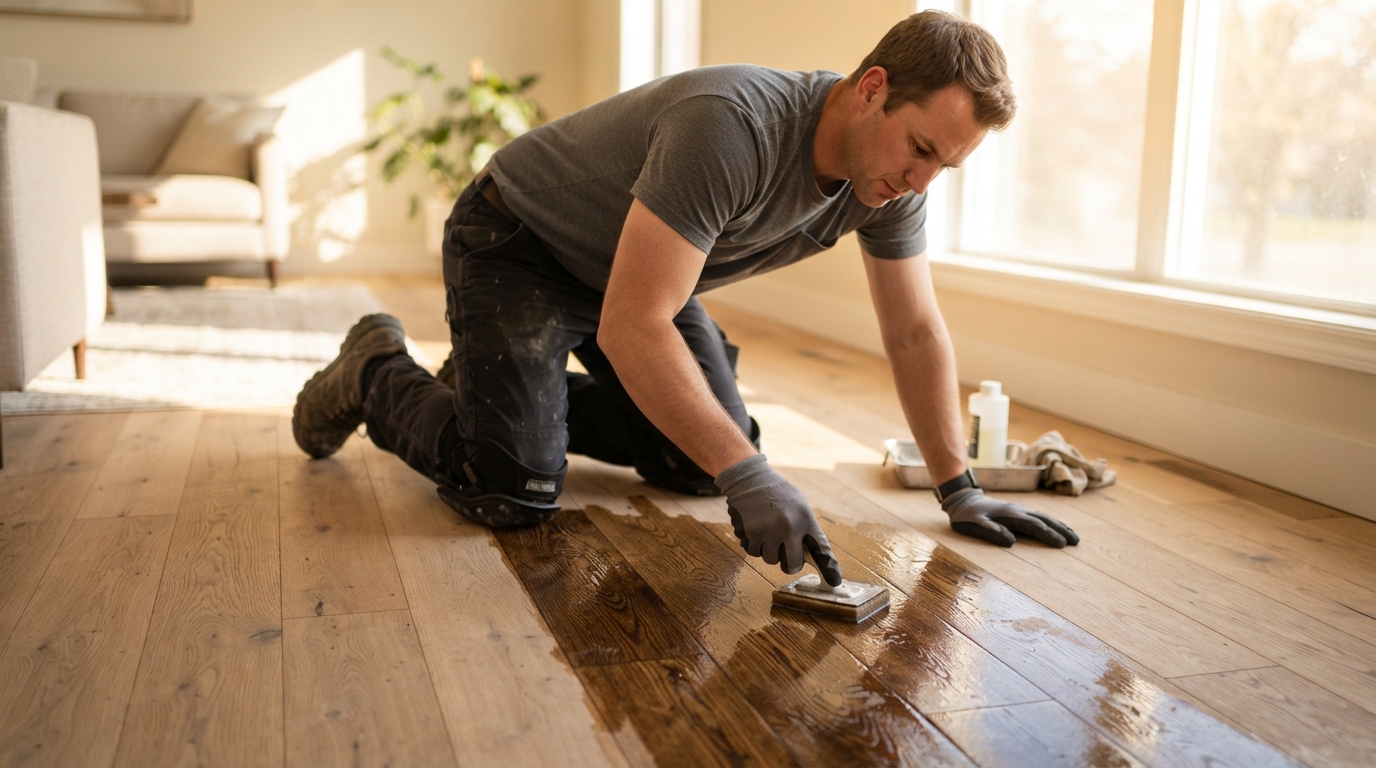
At glance:
• Dustless refinishing processes restore shine and seal hardwood without removing the top wood layer.
• Most jobs are completed in a single day with low odor and minimal disruption to the household.
• The approach works best on floors with light to moderate wear, not deep gouges or water damage.
Dull, scuffed hardwood does not always need a full sand-down to look refreshed. No Sanding Hardwood Floor Refinishing uses a chemical bonding and recoating process that cleans, etches, and seals existing wood surfaces without stripping them to bare wood.
This method differs from traditional refinishing in both scope and disruption. Rather than running drum sanders across every board, technicians apply a bonding agent that prepares the existing finish to accept a new topcoat, then seal the floor with a durable finish layer.
How the Process Differs From Traditional Sanding
Traditional refinishing removes several layers of wood using progressively finer grit sandpaper, exposing fresh wood that then gets stained and sealed. That process generates significant dust, often requires multiple days, and can force residents out of affected rooms.
A no-sand approach skips the wood removal step entirely:
• The floor is cleaned to remove wax, oil, and surface grime.
• A chemical bonding agent etches the existing finish so the new coating adheres properly.
• A fresh topcoat is applied, typically curing within hours rather than days.
Because no wood is removed, the natural board thickness stays intact, which matters for floors that have already been sanded multiple times over their lifespan.
When This Method Works Best
Not every floor is a good candidate for a no-sand finish. The process is designed for surfaces with light wear, minor scuffing, or a dull, cloudy finish rather than structural damage.
Homes in Ruckersville, VA often have hardwood that falls into this category, particularly in older houses where floors have been maintained but have lost their sheen over years of foot traffic. Floors with deep gouges, cupping from water exposure, or finish failure down to bare wood typically still need sanding to correct the underlying problem.
A simple way to judge candidacy is checking whether scratches catch a fingernail. Surface-level dullness and light scratching respond well to recoating; damage that penetrates the wood grain usually does not.
Comparing No-Sand Recoating and Traditional Sanding
| Factor | No-Sand Recoating | Traditional Sanding |
| Typical timeline | Often same day | Multiple days |
| Dust generated | Minimal | Significant |
| Best for | Light wear, dull finish | Deep damage, discoloration |
| Wood removed | None | Several layers |
Humidity and seasonal wood movement are relevant considerations for any refinishing decision in the region. The Virginia Department of Forestry notes that regional climate conditions affect wood moisture content, which is one reason floors in this area can show finish wear even when the boards themselves remain structurally sound.
Maintenance After a No-Sand Finish
A newly recoated floor still needs routine care to extend the life of the finish. Felt pads under furniture legs, prompt cleanup of spills, and periodic dust mopping reduce the grit that causes premature wear.
Avoid steam mops and excess water on recoated hardwood, since moisture can compromise the bond between the new topcoat and the existing finish layer. Most households in Ruckersville, VA find that a dustless recoat lasts several years with consistent maintenance before another application is needed.
Frequently Asked Questions
Does a no-sand finish look as good as a full refinish? On floors with light wear, a bonded recoat restores shine and evens out the finish surface effectively, though it will not change the wood’s existing color or hide deep scratches.
How long does the process typically take? Most no-sand recoating jobs are completed within a single day, with the new finish curing enough for light foot traffic shortly after application.
Can every type of hardwood be recoated this way? Solid and engineered hardwood with an intact existing finish are generally good candidates, but floors with wax buildup, deep water damage, or bare wood exposure usually require evaluation before recoating.
Finding a No-Sand Refinishing Provider
Based in Charlottesville, VA, Mr. Sandless of Central Virginia serves customers across Ruckersville, VA.
Scheduling details and service information for mrsandless.com are available for homeowners evaluating hardwood floor restoration options.