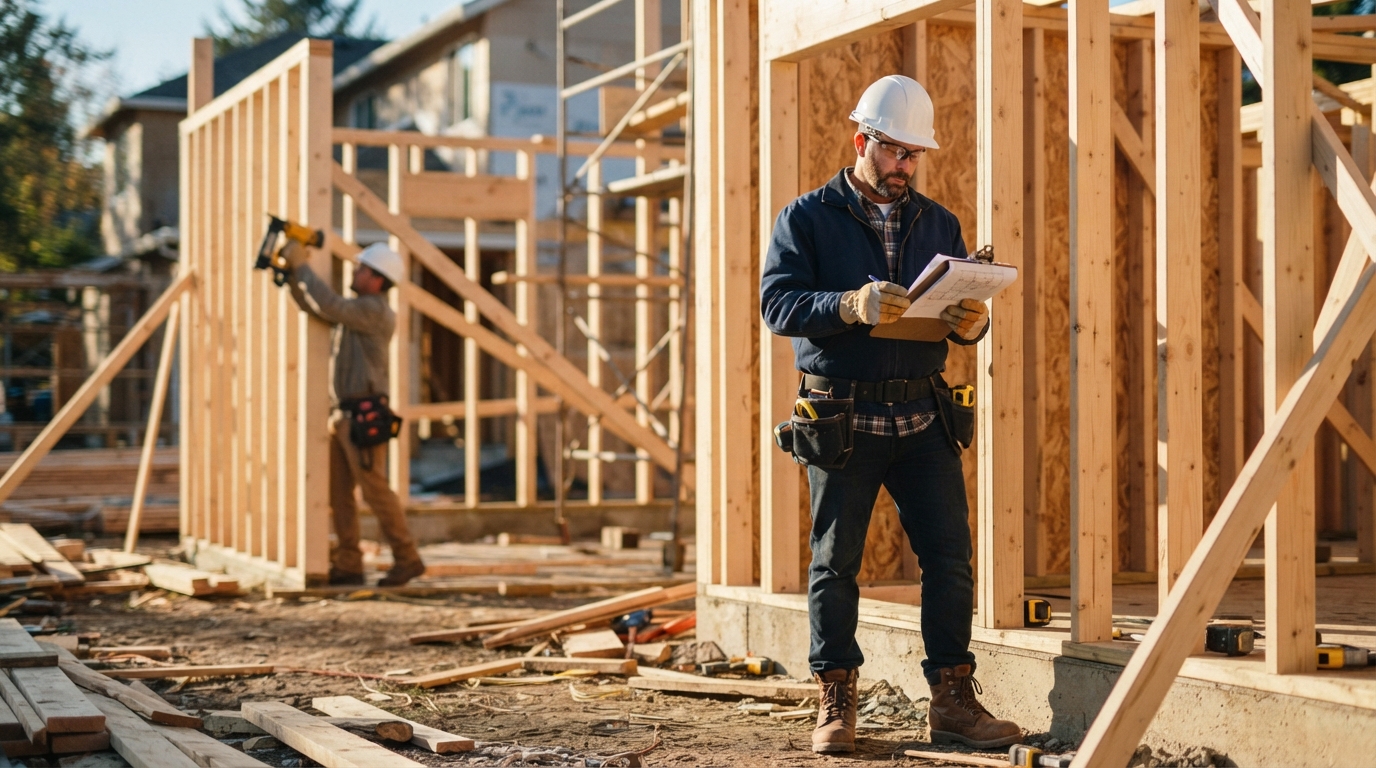
Summary first:
• A construction company manages permits, trade coordination, and inspections so a building project meets code from the ground up.
• Services verified for this market include home additions, garages, sheds, decks, patios, and ADU construction.
• Local permitting in Grand Junction, CO runs through the Mesa County Building Department, which affects timelines for any addition or structure.
A construction company coordinates every phase of a building project, from securing permits and scheduling trade work to passing final inspections. This function matters most on projects that touch a home’s structure, such as additions, garages, decks, or accessory buildings, where a single missed inspection can delay occupancy for weeks.
Homeowners planning an addition or new structure in Grand Junction, CO often underestimate how many moving parts a licensed contractor manages at once. Permits, framing sequences, trade scheduling, and code compliance all have to line up correctly, and a misstep in any one area can stall an otherwise straightforward project.
What a Construction Company Actually Coordinates
A general contractor is responsible for far more than swinging a hammer. The core functions include:
• Pulling and tracking building, electrical, plumbing, and mechanical permits
• Scheduling subcontractors (framers, electricians, plumbers) in the correct sequence
• Managing inspections at each construction phase, from foundation to final occupancy
• Verifying that structural work meets current building codes
• Communicating timeline changes to the homeowner as the project progresses
Each of these tasks has a direct effect on whether a project finishes on schedule. Skipping or mishandling any one of them is a common cause of delay on residential additions and detached structures.
Why Permitting Shapes Every Project Timeline
Permitting is often the single biggest variable in how long a build takes. In Grand Junction, CO, most building permit applications for construction projects are processed through the Mesa County building department, which handles inspections and code review for the City of Grand Junction and surrounding unincorporated areas.
A contractor familiar with local permitting steps can usually anticipate which inspections a project will require before work starts. This includes:
1. Foundation and footing inspection before framing begins
2. Framing inspection once structural elements are in place
3. Rough electrical, plumbing, and mechanical inspections before walls close
4. Final inspection before a certificate of occupancy is issued
Missing a required inspection step, or scheduling trades out of order, is one of the more common reasons a residential project runs past its original timeline.
Comparing Project Approaches
| Approach | Permit Handling | Trade Coordination | Typical Risk |
| Owner-managed build | Owner pulls permits directly | Owner schedules each trade | Higher risk of sequencing errors |
| Licensed general contractor | Contractor manages permit process | Contractor schedules and supervises trades | Lower risk, single point of accountability |
| Unlicensed labor | Permits often skipped or incomplete | No formal trade sequencing | Code violations, resale and insurance issues |
This comparison reflects general industry patterns rather than a claim about any single company’s results, and it illustrates why many homeowners prefer a licensed contractor for additions, garages, or other structural work.
Services Commonly Requested for Residential Projects
Based on verified listings, common project types in this category include home additions, detached garages, storage sheds, carports, and outdoor living spaces such as decks and patios. Based in the USA, the business serves customers across Grand Junction, CO, offering general contracting services involving site-built and pre-fabricated structures. Additional company information is available through the Mor Storage Sales Google Business Profile listing.
Frequently Asked Questions
What does a construction company handle on a typical home addition? A contractor manages permit applications, coordinates trade scheduling, and oversees inspections from the foundation stage through final occupancy approval.
Why does permitting take so long in Mesa County? Permit timelines depend on plan review volume, inspection scheduling, and whether trade permits (electrical, plumbing, mechanical) are required alongside the general building permit.
Can a homeowner pull their own permits instead of using a contractor? Some jurisdictions allow owner-occupants to act as their own general contractor, though this shifts responsibility for code compliance and inspection scheduling onto the homeowner.
Does every addition require a building permit? Any project that changes a structure’s footprint or structural load typically requires a building permit, with separate trade permits for electrical, plumbing, or mechanical work as applicable.
Final Note
Current listing details for Mor Storage Sales are published for the local service area.
Building projects that involve structural changes carry real code and safety implications, making permit tracking and trade sequencing essential. Homeowners considering an addition, garage, or similar project can review local building requirements when researching Construction Company Grand Junction CO services. The permitting and inspection steps outlined above provide a useful starting checklist before requesting bids or finalizing a project scope.