In short:
• Daily cleaning with mild soap and warm water, not acidic or abrasive products, keeps granite looking new.
• Sealing needs vary by stone color and porosity; a simple water-drop test shows whether a countertop needs it.
• Cutting boards, trivets, and coasters prevent the scratching, heat marks, and stains that dull granite surfaces over time.
Granite countertops stay looking new with routine cleaning using pH-neutral products, periodic sealing based on the stone’s porosity, and a few daily habits that prevent scratches, stains, and heat damage. The surface is durable, but it is not maintenance-free, and the way it is cleaned and protected directly affects how long the polish and color hold up.
Homeowners researching Granite Countertops for a kitchen or bathroom project often assume the stone needs little attention after installation. That is mostly true, but granite is porous to some degree, and the wrong cleaning product or a missed sealing cycle can leave permanent marks. Understanding the basics of daily care, sealing, and stain prevention helps protect the investment for years.
Daily Cleaning Habits That Protect the Surface
Routine cleaning is the single most effective way to keep granite looking polished.
• Wipe spills promptly, especially oils, wine, coffee, and acidic foods like citrus or tomato sauce.
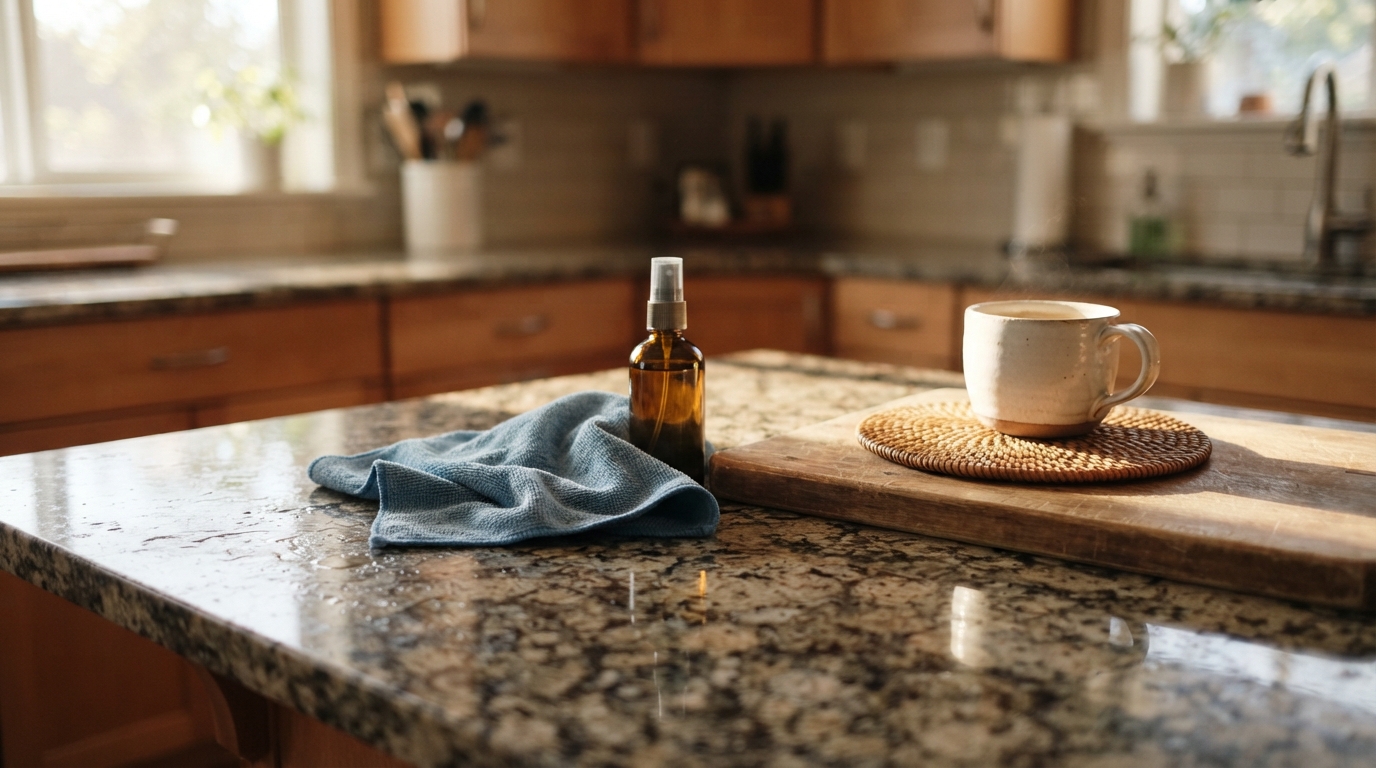
• Use warm water with a few drops of mild dish soap, applied with a soft cloth or sponge.
• Dry the surface after cleaning to prevent water spots and mineral buildup.
• Avoid vinegar, bleach, ammonia, and abrasive scouring pads, which can wear down the sealer and dull the finish.
The Natural Stone Institute recommends mild dish soap or stone-specific cleaners with warm water, rinsing and drying afterward, and avoiding abrasive pads, scouring powders, bleach, ammonia, and acidic cleaners. These simple habits protect both the stone’s finish and any sealer applied beneath the surface.
Sealing: What It Does and How Often It Is Needed
Sealing is often misunderstood. Most granite countertops do not need to be sealed, according to the Natural Stone Institute, though many granite countertops receive additional benefit from being sealed.
Whether a specific slab needs sealing depends on its color, mineral density, and porosity:
| Granite Type | Typical Porosity | General Sealing Interval |
| Dark, dense granite | Low | Every 3 to 5 years, or rarely |
| Light-colored, higher-porosity granite | Higher | Every 12 to 18 months |
| Resin-treated slabs | Low | Varies by manufacturer |
A simple water-drop test helps determine sealing needs at home. According to the natural stone institute’s sealing guidance, a quality sealer should have an oliophobic nature resistant to both water and oil-based stains, with a service life of roughly ten to fifteen years when properly applied. If water placed on the surface beads up rather than soaking in within a few minutes, the existing seal is likely still effective.
Preventing Scratches, Heat Marks, and Stains
Granite resists everyday wear better than many surfaces, but it is not immune to damage from careless use.
1. Always use cutting boards; granite can dull knife blades and knives can occasionally chip the polish.
2. Place trivets or hot pads under pots and pans straight from the stove or oven.
3. Use coasters under glasses to prevent ring marks from condensation or acidic beverages.
4. Clean up acidic spills immediately, since citrus juice and vinegar-based dressings can etch unsealed or worn areas.
These precautions matter particularly in Lexington, KY kitchens, where seasonal humidity swings and frequent home cooking can accelerate wear on unprotected countertop surfaces. Consistent habits, rather than occasional deep cleaning, are what keep granite looking like the day it was installed.
Frequently Asked Questions
How often should granite countertops be resealed? Resealing frequency depends on the stone’s porosity. Lighter, more porous granite may need sealing every 12 to 18 months, while denser, darker granite can go several years between applications, based on the water-drop test result.
Can I use vinegar or glass cleaner on granite? No. Acidic or ammonia-based products can wear down sealers and etch the stone surface over repeated use. A mild, pH-neutral soap and water solution is the safer daily choice.
Does granite stain easily? Granite resists staining reasonably well when properly sealed and cleaned promptly after spills. Oil, wine, and coffee are the most common culprits if left to sit on an unsealed or worn surface.
Is granite countertop maintenance different from quartz? Yes. Quartz is engineered and generally does not require sealing, while natural granite’s porosity varies by slab and may need periodic sealing to maintain stain resistance.
Local Resources for Granite Countertop Care
Mees Tile & Marble is based in USA and serves customers across Lexington, KY with fabricated natural stone slab materials, including granite.
Homeowners comparing stone options for a kitchen or bathroom project can View Site To Explore Granite Countertops Options to review available slab styles and finishes.