Quick take:
• A well water test report compares contaminant levels against EPA health and nuisance thresholds, not a simple pass or fail grade.
• Bacteria, nitrates, pH, and total dissolved solids are the baseline markers most labs report on every annual test.
• Results outside recommended ranges usually point to a specific treatment step, not an automatic well replacement.
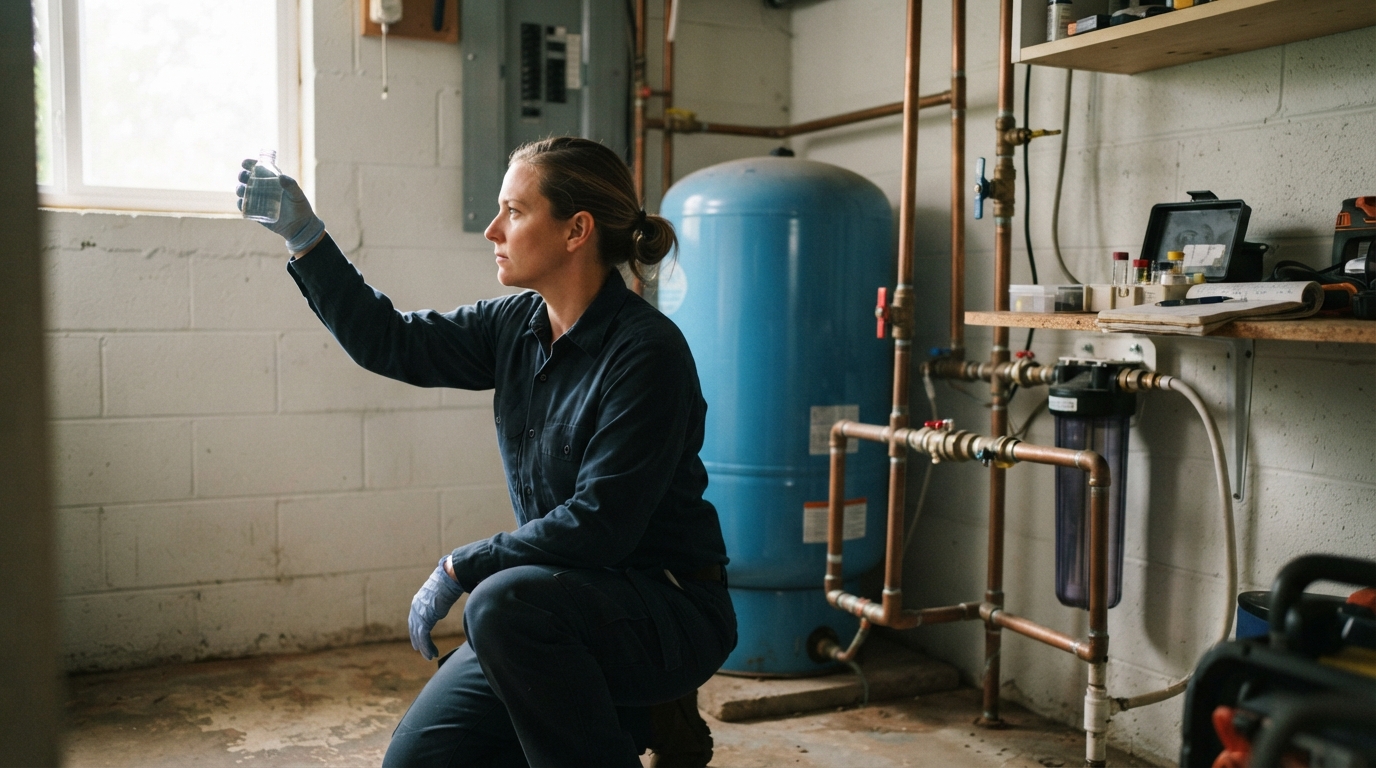
A well water testing result shows the concentration of specific contaminants in a water sample compared against established health and nuisance standards, helping a homeowner decide whether treatment is needed. Reading the report correctly means matching each number to its reference limit rather than assuming any detected substance is dangerous.
Private wells fall outside the oversight that applies to city water systems, which changes how results should be interpreted. Well water testing typically screens for a defined set of biological, chemical, and physical indicators, and each one carries its own acceptable range rather than a single universal standard.
What a Standard Test Report Actually Measures
Most residential well reports organize results into a handful of categories. Recognizing which category a contaminant falls into makes the numbers easier to interpret.
• Biological indicators : Total coliform bacteria and E. coli signal possible sewage or surface water intrusion into the well.
• Chemical indicators : Nitrates, pH, and total dissolved solids (TDS) reflect corrosion risk and general water chemistry.
• Aesthetic factors : Iron, manganese, and sulfur affect taste, odor, and staining but are not primary health threats at typical levels.
• Site-specific contaminants : Arsenic, lead, radon, or pesticides may be added based on local land use and well depth.
According to EPA guidance on protecting private well water, wells should be tested annually for total coliform bacteria, nitrates, total dissolved solids, and pH levels, with additional testing immediately after flooding, well repairs, or any noticeable change in taste or odor.
How to Read the Numbers Against EPA Limits
Lab reports generally list three figures side by side: the measured result, the detection limit, and the reference standard. A result above the Maximum Contaminant Level (MCL) indicates a health-based concern, while a result above the Secondary MCL points to a nuisance issue like staining or odor rather than a safety risk.
| Indicator | Typical Concern | General Reference Range |
| Total coliform bacteria | Sewage or surface water intrusion | Should not be detected |
| Nitrate | Agricultural runoff, septic proximity | Below 10 mg/L |
| pH | Pipe corrosion or scale buildup | 6.5 to 8.5 |
| Total dissolved solids | General mineral content | Varies by local geology |
For households in Gretna, NE relying on private wells, agricultural land use nearby can influence nitrate and bacteria readings more than it would for municipal customers, so understanding these local factors helps put a single test result in context.
What to Do With an Out-of-Range Result
A result flagged above a reference limit does not automatically mean the well is unsafe to use for every purpose. The next step depends on which contaminant triggered the flag.
1. Confirm the result with a certified laboratory retest, since sampling error can produce a false positive.
2. Identify whether the issue is health-based (bacteria, nitrate, arsenic) or aesthetic (iron, hardness, sulfur).
3. Match the contaminant to an appropriate treatment method, such as disinfection for bacteria or a filtration system for iron and manganese.
4. Schedule a follow-up test after any treatment change or well repair to confirm the fix worked.
Retesting on a regular schedule, rather than only after a problem appears, builds a longer record that makes it easier to spot gradual changes in well water quality over time.
Frequently Asked Questions
How often should a private well be tested? Annual testing for bacteria, nitrates, pH, and total dissolved solids is the general baseline, with additional testing after flooding, well repairs, or a sudden change in water taste or appearance.
Does a positive bacteria result mean the well needs to be replaced? No. A positive coliform result usually points to a fixable issue such as a cracked well cap or casing seal, and is often resolved through disinfection and a confirming retest.
Can a well test detect everything that might be in the water? A standard annual panel covers the most common indicators, but site-specific contaminants like arsenic, radon, or pesticides require requesting additional tests based on local conditions.
Why do test results sometimes vary between labs? Differences in sample handling, holding time, and laboratory certification can affect results, which is why using a consistently certified lab for repeat testing improves reliability.
Local Service Information
Based in USA, Omaha H2O serves customers across Gretna, NE.
Additional background on interpreting private well sample results and scheduling follow-up testing is available through Learn More About Well Water Testing.