Key point:
• A commercial roofing project typically moves through inspection, estimate, material selection, installation or repair, and final walkthrough.
• Flat and low-slope systems such as TPO, EPDM, and modified bitumen are common on commercial buildings and each carry different maintenance needs.
• Licensing, insurance, and documented fall-protection practices are the baseline items a property manager should confirm before signing a contract.
Hiring a Commercial Roofing Contractor means working with a licensed professional who inspects the roof, proposes a material and repair or replacement plan, and carries out the work under documented safety and warranty terms. For property owners and facility managers in Richmond, VA, understanding this sequence in advance helps set realistic expectations around timelines, costs, and communication.
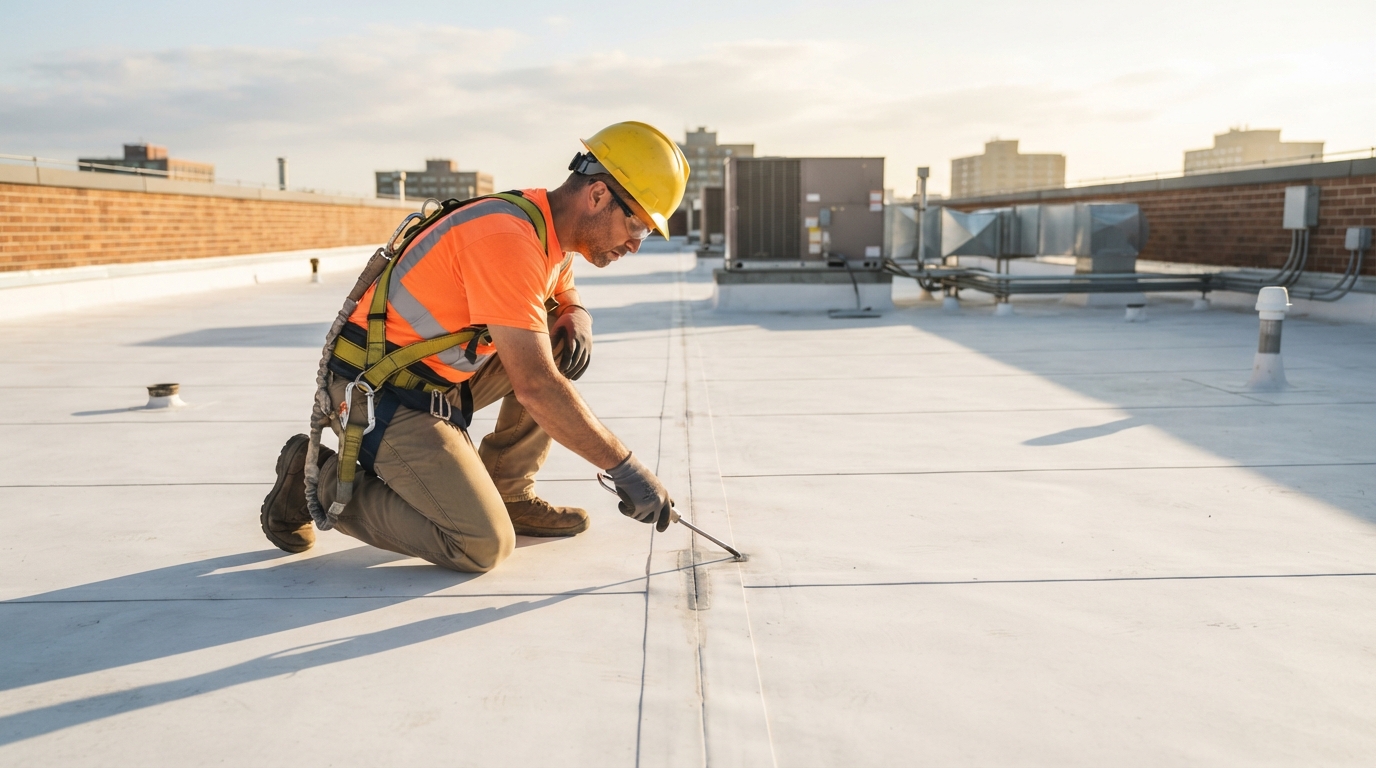
The process generally starts with a site visit rather than a phone quote. A Commercial Roofing Contractor will walk the roof surface, check drainage points, flashing, and seams, and document any soft spots or ponding water before preparing a scope of work. This step matters because commercial roofs, particularly flat and low-slope systems, hide damage that is not visible from the ground.
What Happens During the Initial Inspection
A thorough inspection is the foundation of any accurate estimate. Contractors typically look for:
• Membrane punctures, blistering, or seam separation
• Standing water or inadequate drainage slope
• Deteriorated flashing around HVAC units, vents, and parapet walls
• Interior signs of leaks, such as ceiling stains or mold
• Overall remaining service life of the existing system
Findings are usually paired with photos and a written estimate that breaks down labor, materials, and any code-driven requirements tied to the building’s age or location.
Common Commercial Roofing Systems and Repairs
Commercial buildings rarely use asphalt shingles. Most low-slope roofs rely on single-ply membranes or built-up systems, each with different lifespans and repair methods.
| System Type | Typical Use | Maintenance Consideration |
| TPO | Flat/low-slope commercial roofs | Seam inspections every 1-2 years |
| EPDM (rubber) | Flat roofs, warehouses | Watch for shrinkage at edges |
| Modified Bitumen | Multi-layer flat roofs | Check for blistering, granule loss |
| Metal | Steep-slope commercial/industrial | Inspect fasteners and seams |
Repairs often involve patching membrane punctures, resealing flashing, or addressing drainage issues before they expand into structural problems. Full replacement is typically recommended once a membrane nears the end of its service life or repairs become frequent and costly relative to a new system.
Safety, Licensing, and Documentation to Confirm
Before work begins, a property owner should confirm a few baseline items that affect liability and project quality:
1. Active state contractor licensing appropriate for commercial work
2. Current liability insurance and workers’ compensation coverage
3. A written fall-protection plan for roof access and perimeter work
4. A documented scope of work with material specifications and timeline
5. Warranty terms covering both materials and workmanship
Fall protection is not optional on commercial roofs. Federal construction standards require protection such as guardrails, safety nets, or personal fall arrest systems once workers are exposed to falls at six feet or more above a lower level, according to . Property managers can reasonably ask a contractor how this requirement is met on-site before work starts.
Based in Glen Allen, VA, DeShazo and Son Roofing serves commercial and residential customers throughout Richmond, VA, providing flat roofing, metal roofing, and related membrane systems. Property owners can Click Here to Find a Commercial Roofing Contractor to explore available services, service categories, and customer reviews.
Frequently Asked Questions
How long does a commercial roof replacement typically take? Timelines depend on roof size, system type, and weather, but most flat-roof replacements on mid-size commercial buildings are completed within several days to a couple of weeks once materials are on-site.
What is the difference between a roof repair and a roof restoration? A repair addresses isolated damage like a puncture or failed seam, while a restoration applies a coating or overlay across the entire roof surface to extend its service life without full tear-off.
Can commercial roofing work happen while a business stays open? In many cases, yes. Contractors commonly schedule noisy or disruptive phases around business hours and coordinate access points to limit interference with daily operations.
What should be included in a commercial roofing estimate? A complete estimate should itemize labor, materials, disposal of old roofing, flashing and drainage work, and the specific warranty terms attached to both materials and installation.
A current listing of commercial roofing project details for Commercial Roofing Contractor is published for the local service area. Property owners weighing repair against replacement benefit from comparing inspection findings, warranty terms, and documented safety practices across more than one estimate before committing to a project timeline.