Quick take:
• Water damage restoration follows a set sequence: inspection, extraction, drying, cleaning, and repair.
• Acting within the first 24 to 48 hours significantly limits mold growth and structural damage.
• Timelines depend on the water category and the extent of moisture intrusion into building materials.
Water damage restoration is the structured process of removing excess water, drying affected materials, and repairing a property after a leak, flood, or burst pipe. Most projects move through five stages, starting with an inspection and ending with final repairs, though the exact duration depends on how much moisture has reached walls, flooring, and framing.
Anyone searching for Water Damage Restoration after a pipe break or storm intrusion typically wants to know what happens first, how long the work takes, and what determines cost. Understanding the standard sequence helps property owners in Prairieville, LA set realistic expectations before crews arrive and while drying equipment runs.
How the Restoration Process Unfolds
Professional restoration generally follows a consistent order, even though the length of each stage varies by damage severity.
1. Inspection and assessment – technicians identify the water source, categorize contamination level, and check how far moisture has traveled into walls or subflooring.
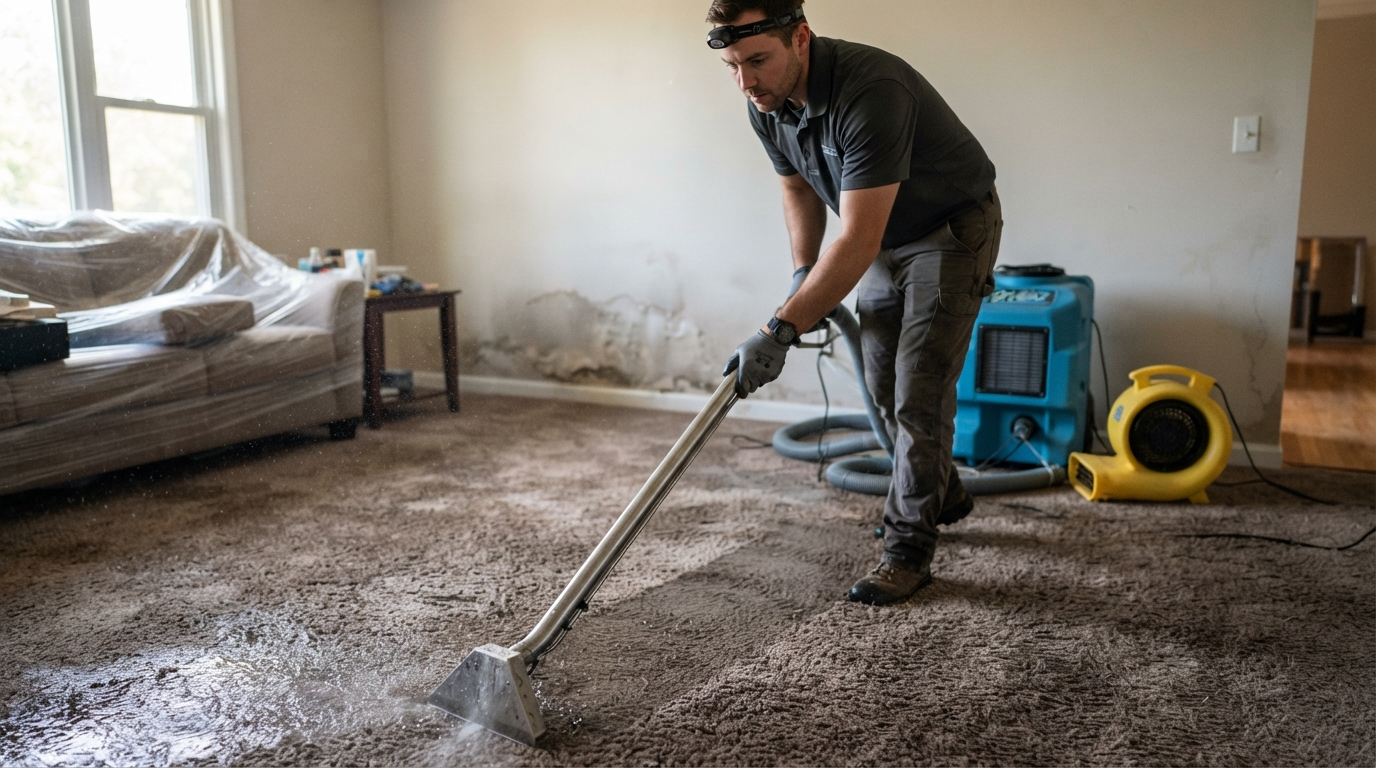
2. Water extraction – standing water is removed using pumps and extraction equipment to stop further saturation.
3. Drying and dehumidification – industrial air movers and dehumidifiers reduce moisture in materials that cannot be removed.
4. Cleaning and sanitizing – surfaces and contents are cleaned to address contamination and odor.
5. Repairs and reconstruction – damaged drywall, flooring, or trim is replaced to return the space to pre-loss condition.
Each step depends on accurate moisture readings rather than visual inspection alone, since materials can appear dry on the surface while still holding water underneath.
Why Timing Matters So Much
Delays between water exposure and drying have a direct effect on outcomes. According to EPA guidance on mold and moisture, it is important to dry water-damaged areas and items within 24-48 hours to prevent mold growth. That narrow window is why restoration crews prioritize extraction and drying before addressing cosmetic repairs.
• Materials dried within two days typically avoid secondary mold colonization.
• Porous materials such as carpet padding and drywall hold moisture longer than hard surfaces.
• Humidity levels in the surrounding air affect how quickly structural materials release trapped water.
Local Conditions That Affect the Timeline
Housing stock and climate both influence how a restoration project unfolds in Prairieville, LA. Many homes in the area sit on slab foundations, which respond differently to water intrusion than raised or pier-and-beam structures, often trapping moisture against baseboards and lower wall cavities. Louisiana’s humidity also slows natural evaporation, so mechanical drying equipment typically runs longer than it would in drier climates.
| Water Category | Source Examples | Typical Restoration Focus |
| Category 1 (clean water) | Supply line break, appliance overflow | Extraction and drying |
| Category 2 (gray water) | Washing machine discharge, sump failure | Extraction, cleaning, disinfecting |
| Category 3 (black water) | Sewage backup, flood water | Removal of contaminated materials, sanitizing |
Restoration based in Baton Rouge, LA extends into Prairieville, LA, where property owners deal with similar humidity and foundation patterns common across the Baton Rouge metro area. Bross Restoration, a restoration company headquartered in Baton Rouge, LA, is one provider that responds to water damage calls in that broader service area, with Bross Restoration listing inspection, extraction, and drying among its documented process steps.
What Determines Overall Project Length
Several variables shape how long a restoration project takes from the first inspection to final repairs.
• Extent of saturation – water confined to one room dries faster than moisture that has spread through multiple floors.
• Building materials – hardwood, drywall, and insulation each require different drying times.
• Category of water – contaminated water often requires material removal rather than drying in place, which adds time.
• Ventilation and humidity – homes with limited airflow or high ambient humidity need extended equipment run time.
Property owners should expect moisture monitoring to continue even after visible water is gone, since drying equipment is typically left in place until readings confirm materials have returned to normal levels.
Frequently Asked Questions
How soon should water be addressed after a leak or flood? Extraction should begin as soon as possible, ideally within hours, since the 24 to 48 hour window for preventing mold growth starts as soon as materials get wet.
Does every water damage job require reconstruction? No. Jobs limited to clean water with quick extraction may only need drying and cleaning, while jobs involving saturated drywall, flooring, or insulation often require replacement of those materials.
Can homeowners dry a property themselves? Minor surface spills can sometimes be managed with fans and towels, but water that reaches wall cavities, subflooring, or insulation generally requires professional moisture detection equipment to confirm materials are fully dry.
What role does humidity play in drying time? High ambient humidity slows evaporation from building materials, which is why dehumidification equipment is a standard part of the drying stage in humid regions.
Current availability details for Read More About Water Damage Restoration are published for the local service area.