Simply put:
- Card value depends on condition, scarcity, player performance, and certified grading status.
- Proper storage in sleeves, top loaders, and climate-controlled spaces prevents long-term damage.
- Buying, selling, or appraising cards works best through dealers familiar with current market pricing.
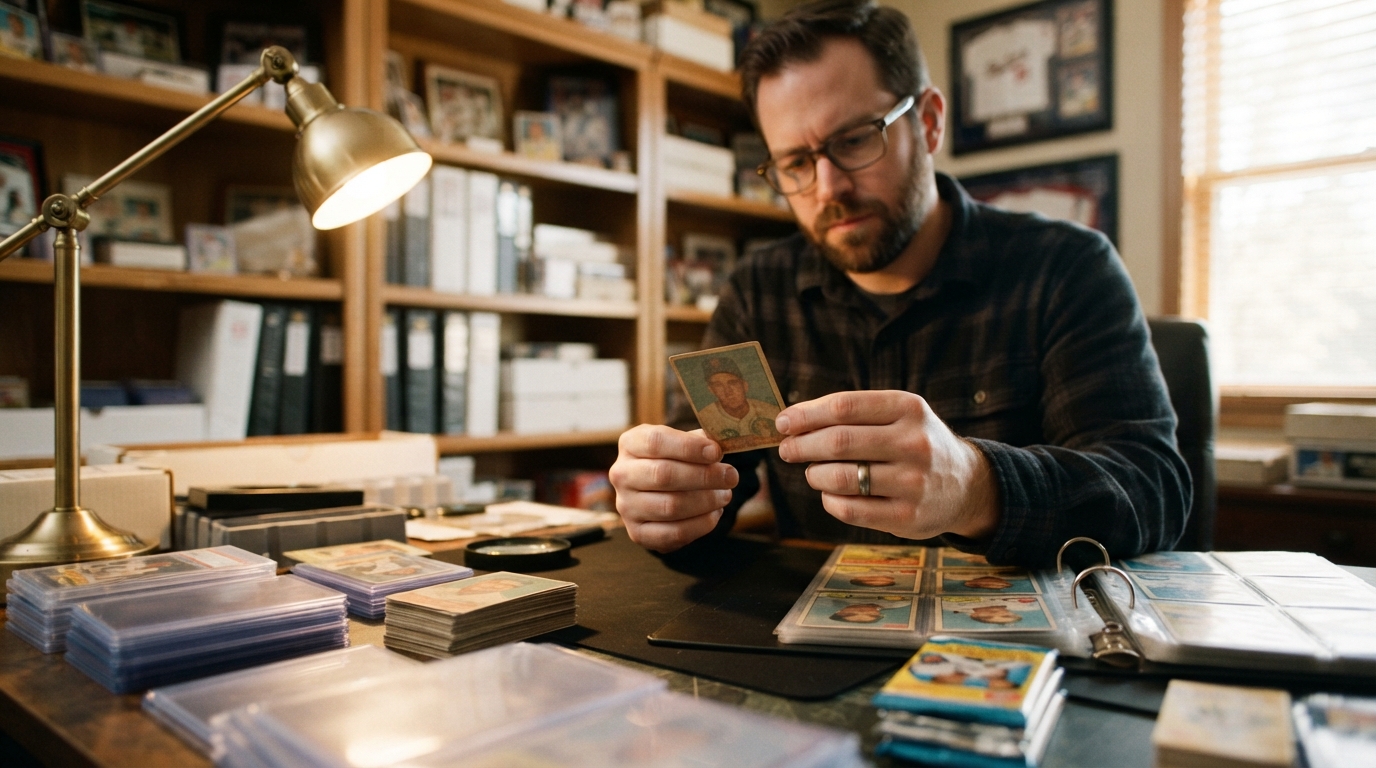
Collecting cardboard pieces of sports history remains one of the most accessible hobbies for both new and veteran enthusiasts. Anyone wondering where to start with Baseball Cards should first understand the basic factors that drive value before buying, selling, or storing a collection.
What Determines a Card’s Value
Several measurable factors combine to set a card’s worth on the open market. Collectors in Londonderry, NH and elsewhere typically evaluate the same core criteria before making a purchase or sale.
- Condition: Corners, edges, surface, and centering all affect grade and price.
- Scarcity: Limited print runs, short-printed inserts, and rookie cards tend to command higher prices.
- Player relevance: Active performance, milestones, and Hall of Fame induction can shift demand.
- Certification: Cards graded by a recognized third-party service carry more buyer confidence than raw, ungraded cards.
Grading services assign numeric scores, usually on a 1-to-10 scale, after inspecting a card under magnification. A small difference in grade, such as moving from an 8 to a 9, can change a card’s resale value substantially depending on the player and year.
Storage and Preservation Basics
Physical damage is one of the most common reasons a card loses value over time. Basic preservation habits protect both common cards and higher-value pieces in a collection.
- Use penny sleeves for everyday handling and top loaders for added rigidity.
- Store boxes in a climate-controlled space away from direct sunlight and humidity swings.
- Avoid rubber bands, paper clips, or adhesive materials that can warp or stain cardboard.
- Handle cards by the edges to reduce fingerprint oils and surface wear.
The Smithsonian Institution notes that paper-based collectibles, including sports cards, are sensitive to light exposure and fluctuating humidity, which can accelerate fading and warping over time according to Smithsonian National Postal Museum preservation guidance. Consistent storage conditions matter more than any single protective product.
Buying, Selling, and Appraising a Collection
Collectors who inherit or accumulate cards over the years often need a clear path to determine what they own. A local dealer familiar with current market comparisons can review a collection in person, which is typically faster and more accurate than relying solely on online price guides.
| Option | Speed | Accuracy | Best For |
| Online price guides | Fast | Moderate | Rough estimates |
| Local dealer appraisal | Fast | High | Full collections |
| Third-party grading submission | Slow | Highest | High-value individual cards |
| Auction house consignment | Slow | High | Rare or vintage cards |
Sellers in Londonderry, NH working with an in-person dealer can get immediate feedback on condition and likely value, which helps set realistic expectations before listing cards for sale elsewhere. This approach also reduces the risk of underselling a card whose value depends on subtle grading distinctions.
Frequently Asked Questions
How do I know if my cards are worth grading? Cards with strong centering, sharp corners, and no visible surface wear are the best candidates, especially rookie cards or limited print inserts tied to well-known players.
What is the difference between raw and graded cards? A raw card has not been evaluated by a third-party grading service, while a graded card has been authenticated, scored, and sealed in a protective case, which generally increases buyer trust and resale value.
Can old, damaged cards still be worth selling? Yes, even heavily played cards can hold value if they feature a notable rookie season or historically significant player, though pricing will reflect the lower condition grade.
Is it better to sell a full collection at once or individually? It depends on the mix of cards; high-value individual pieces often sell better separately, while common cards are frequently sold in bulk lots to dealers or other collectors.
Getting a Collection Reviewed Locally
Card Czar is based in Londonderry, NH and serves customers across Londonderry, NH.
Current listings and inventory details for Click Here To Buy Cards are published for collectors researching available cards online.