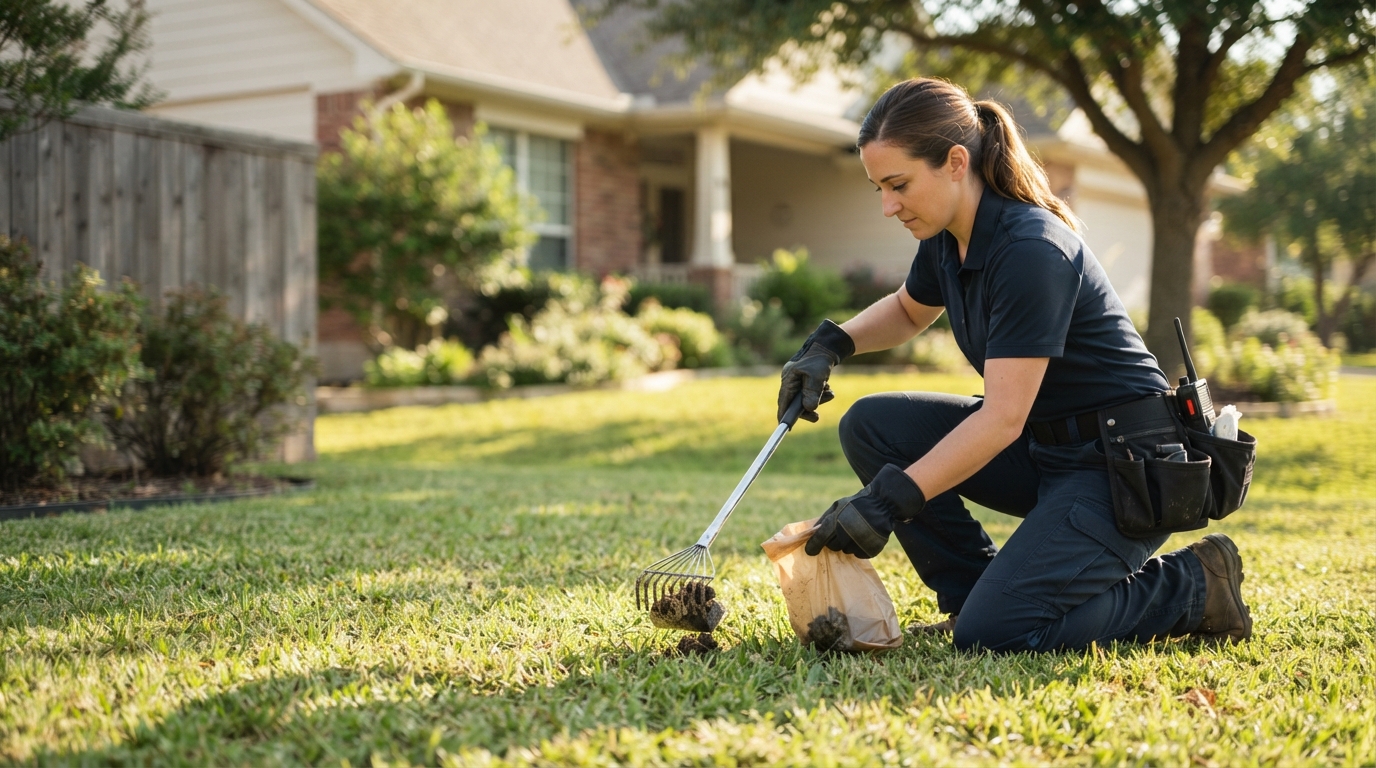
Dog waste left on lawns or in yards poses measurable health risks because it harbors bacteria and parasites that can spread to humans, pets, and local water systems through contact or runoff. Consistent removal is the primary way to limit these exposures.
Dog feces contain organisms such as roundworms, hookworms, and bacteria including E. coli and Salmonella, which can survive in soil for extended periods under the right conditions. Routine dog waste management reduces the window during which these pathogens remain active in a yard. Left unaddressed, waste can also attract flies and rodents that carry additional disease risk to a property.
How Pet Waste Affects Local Water and Soil
Rainfall and irrigation can carry waste residue from lawns into storm drains, which often empty directly into streams or reservoirs without treatment. The EPA identifies pet waste as a source of excess nutrients and pathogens that can degrade water quality when it washes into storm systems. In a region like Centennial, CO, seasonal snowmelt and spring rain create additional runoff events that can move waste-borne bacteria off a property and into shared waterways.
Soil contamination is a related but separate concern. Parasite eggs from dog feces can persist in soil for months, creating a longer-term exposure risk for anyone who gardens, plays, or walks barefoot in an affected yard.
Health Risks Linked to Dog Waste Exposure
The risks associated with poor waste management extend beyond unpleasant odor and appearance. Several specific health concerns are documented by veterinary and public health sources:
• Parasitic infection: Roundworm and hookworm eggs in feces can transfer to humans through soil contact, particularly affecting children who play outdoors.
• Bacterial illness: Bacteria such as E. coli and Salmonella can cause gastrointestinal illness if ingested through contaminated hands, surfaces, or water.
• Secondary pest attraction: Flies and rodents drawn to waste piles can introduce additional pathogens to a property.
• Pet-to-pet transmission: Dogs that encounter other dogs’ waste face a higher risk of parasite reinfection, extending veterinary treatment needs.
These risks apply broadly across residential yards, parks, and shared green spaces, making routine removal a practical preventive step rather than a cosmetic one.
Comparing Waste Management Approaches
Households typically choose between a few common approaches to managing dog waste, each with different trade-offs in time, consistency, and health outcomes.
| Approach | Frequency | Health Risk Reduction | Effort Required |
| No routine removal | Rarely or never | Low | None, but highest exposure risk |
| Weekly self-cleanup | Once per week | Moderate | Low to moderate |
| Scheduled professional removal | Weekly or multiple times per week | Higher | Minimal for the household |
Weekly self-cleanup lowers exposure compared to no removal at all, but waste can still accumulate between cleanings, allowing bacteria and parasite eggs more time to establish in soil. Scheduled removal on a more frequent basis narrows that window further.
Based in USA, Poopless Yards serves customers across Centennial, CO, reflecting how yard sanitation services can operate regionally without maintaining a local office or branch in every area served.
Frequently Asked Questions
How long can parasites survive in dog waste left in a yard? Parasite eggs, including roundworm eggs, can remain viable in soil for extended periods depending on temperature and moisture, which is why prompt removal matters more in warmer, wetter months.
Can dog waste contaminate a home’s drinking water? Direct contamination of treated municipal water is unlikely, but runoff carrying waste bacteria into storm drains can affect untreated surface water sources such as streams and reservoirs, as noted by the EPA.
Is dog waste a risk even in a fenced, private yard? Yes. Pathogens in waste do not require public access to pose a risk; pets, children, and anyone gardening or walking in an affected yard can still be exposed.
Does picking up waste once a week provide adequate protection? Weekly cleanup reduces risk compared to no removal, but bacteria and parasite eggs can still develop within days, so more frequent removal offers additional protection in high-traffic yards.
Business Info
Yard sanitation services such as Poopless Yards focus on routine removal of dog waste from residential properties, which supports the broader goal of reducing household exposure to waste-related pathogens.
Current service area information for Poopless Yards is published for residential properties in the region.