The gist:
• Dust, allergens, and debris accumulate in HVAC ductwork over time and can recirculate through a home’s air supply.
• Removing built-up contaminants from supply and return ducts supports more consistent airflow and may reduce airborne particles in living spaces.
• Professional inspection and cleaning typically covers supply registers, return vents, and the main trunk lines connected to the furnace or air handler.
Dust, pet dander, pollen, and other particulates settle inside heating and cooling ductwork and get redistributed every time the system cycles on. House Air Duct Cleaning Omaha NE addresses this buildup by removing debris from the supply and return lines that carry conditioned air throughout a home. Over months or years of regular furnace and air conditioner use, this accumulation can affect both airflow efficiency and the particles circulating through living spaces.
Homes in Omaha, NE experience wide seasonal temperature swings, from humid summers to dry winter heating months, and HVAC systems in the region often run for extended stretches to maintain comfort. This near-constant operation means ducts in the area are exposed to repeated cycles of dust intake and redistribution. According to the EPA’s indoor air quality guidance, indoor air can carry higher concentrations of some pollutants than outdoor air, making ventilation system maintenance a relevant consideration for households managing allergy or respiratory sensitivities.
What Happens During a Duct Cleaning Service
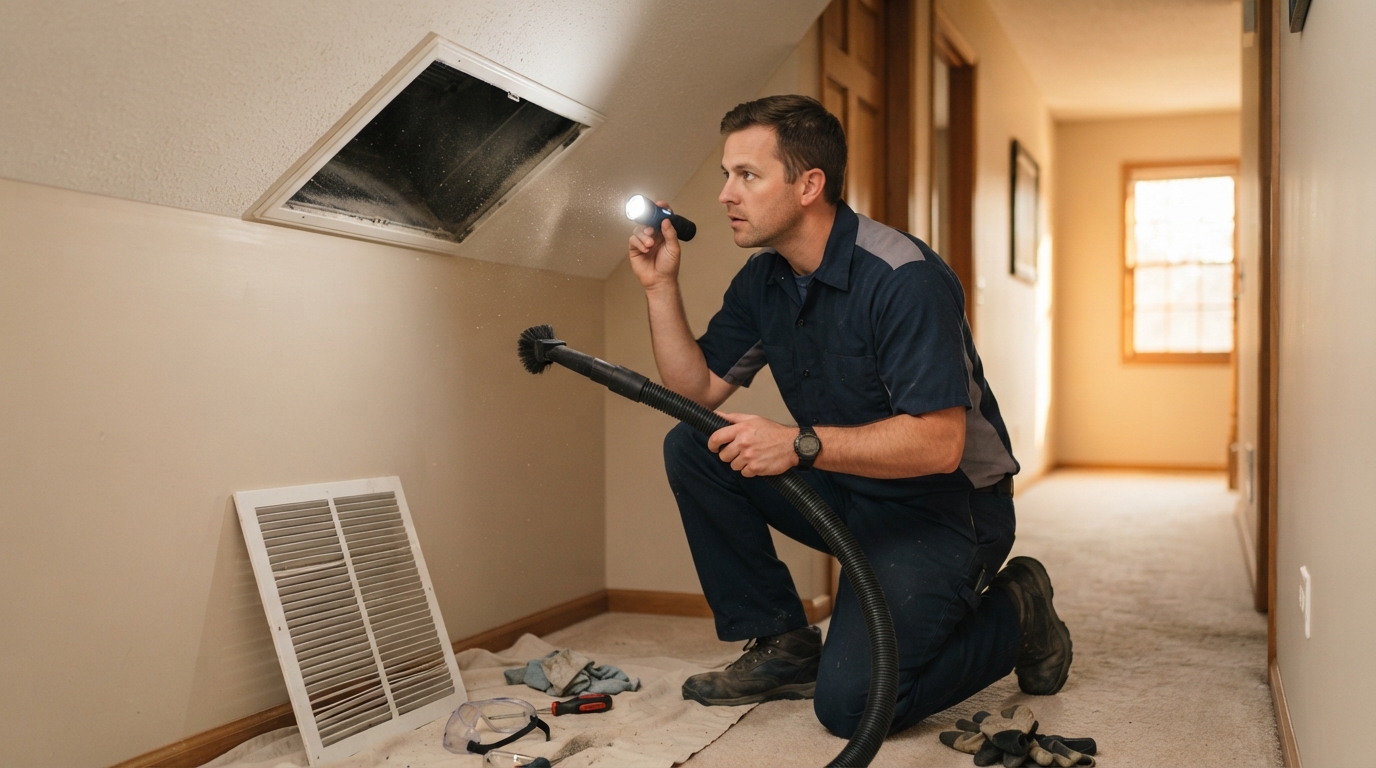
A typical service inspects the ductwork before any cleaning begins to identify visible buildup, moisture issues, or damage.
• Supply registers and return air vents are accessed and cleaned individually.
• Main trunk lines connected to the furnace or air handler are cleared of accumulated debris.
• Equipment such as agitation tools and vacuum collection systems loosens and removes particulate matter from duct interiors.
• A final visual check confirms that major accessible sections are free of visible dust and debris.
This process differs from simply replacing an air filter, since filters only capture particles passing through them rather than removing material already settled inside the duct walls.
Signs Ductwork May Need Attention
Several observable conditions often prompt homeowners to schedule an inspection:
1. Visible dust accumulating quickly on surfaces near vents after cleaning.
2. A noticeable increase in dust blowing from registers when the system starts.
3. Musty or stale odors when the HVAC system is running.
4. Uneven airflow between rooms despite a functioning thermostat.
None of these signs alone confirms that ducts are the source of a comfort or air quality issue, since filters, humidity levels, and equipment age can also play a role. A visual inspection remains the most reliable way to determine whether duct buildup is contributing to the problem.
Comparing Maintenance Approaches
| Maintenance Task | Primary Purpose | Typical Frequency |
| Air filter replacement | Captures airborne particles before they enter ductwork | Every 1-3 months |
| Duct inspection | Identifies visible buildup or damage inside ductwork | Periodically, as needed |
| Full duct cleaning | Removes accumulated debris from supply and return lines | As recommended after inspection |
| HVAC system tune-up | Checks mechanical components for efficient operation | Annually |
Each task serves a distinct function, and relying on only one approach, such as filter changes alone, does not address debris already lodged deeper in the duct system.
Based in USA, DuctMedic Air Duct Cleaning serves customers across the Omaha, NE area with duct inspection and cleaning work performed on-site at each customer’s property. Service scheduling and scope are typically confirmed after an initial look at the ductwork’s condition.
Frequently Asked Questions
How long does a typical duct cleaning appointment take? Appointment length varies based on home size, duct accessibility, and the extent of buildup found during inspection, so timing is best confirmed directly with the service provider.
Does duct cleaning replace the need for filter changes? No. Filters capture ongoing airborne particles, while duct cleaning removes debris already settled inside the duct system, and both tasks serve complementary roles in maintaining air handling equipment.
Can dirty ducts affect heating and cooling costs? Restricted airflow from debris buildup can make an HVAC system work harder to reach set temperatures, though the exact effect on energy use depends on the system and the degree of blockage.
Is duct cleaning necessary in every home? Not necessarily. An inspection showing minimal buildup may indicate cleaning is not yet needed, while visible dust, odors, or recent renovation work are common reasons to schedule a closer look.
Scheduling Considerations
Homeowners weighing whether to schedule a duct inspection often benefit from reviewing current availability before committing to a service date. Current scheduling information for DuctMedic Air Duct Cleaning is published for households in the service area.